Guyut is a medium-sized to large dragon fruit with white flesh that usually weighs between 0.75 and 1 lb. It has a nice sweet taste. This variety makes its own pollen and sets fruit on its own.
Description
The dragon fruit, also called Hylocereus undatus, is a tropical fruit that comes from the Cactaceae family of climbing cacti. The fruit is popular in Southeast Asia and is grown a lot in Vietnam. The dragon fruit is refreshing and tasty, and it is also full of vitamin C, calcium, and phosphorus. It is also thought to help digestion.
| Soil needs: | Average well-drained rich |
| Water needs: | Regular, even moisture |
| Sun exposure: | Mostly Sun |
| Fruit color: | Vibrant red |
| Flower color: | White |
| Flower season: | Spring, Summer, Fall |
| PH: | 0.3 – 1.0 |
| Flavor: | 4 out of 5 |
| Appearance: | 4 out of 5 |
| Production: | 3 out of 5 |
| Home planting: | 4 out of 5 |
| Commercial planting: | 3 out of 5 |
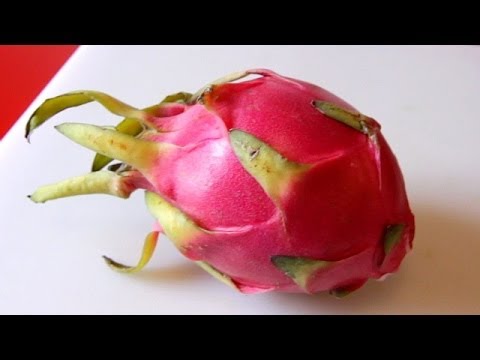
This dragonfruit has bright pink and large scales that make it look very interesting. The fruit looks like an oval, an ellipse, or a pear. The flesh has a taste that is either slightly sweet or slightly sour. The flesh is white, and there are black seeds all over it. The seeds, which look like kiwi seeds.
Over a hundred years ago, the French brought the fruit to Vietnam. Some say the French took the fruit from Nicaragua and Colombia, while others say they brought it with them as an ornamental plant from Guyana in South America in 1870. Today, Vietnam is the biggest exporter of pitaya in the world. In fact, dragon fruit sales make up 55% of Vietnam’s fruit exports.
But the dragon fruit is also being grown more and more in places like Thailand, Indonesia, Israel, northern Australia, southern China, the Philippines, and Hawaii, which is putting Vietnam’s dominance in the market in jeopardy.
China buys 77 percent of Vietnam’s dragon fruit production. China has successfully grown dragon fruit on 20,000 ha of land in Guangdong and Guangxi provinces, which is about the same amount of land that Vietnam uses to grow dragon fruit.

Our experience with this variety
I love gardening most because I get to eat what I grow. Even more so when I get to eat something I can’t buy anywhere else. The dragon fruit is a good example. Have you ever seen or eaten a dragon fruit, which is also called a pitaya or pitahaya? The bright pink fruits look like little footballs and have green “fins” on them.
There are at least four main kinds of dragon fruit. White meat with pink skin, white meat with yellow skin, red meat with pink skin, and purple meat with pink skin. Some types can be grown from seeds, but any type can be grown from cuttings of a living vine or bought as a plant.

So I chose to try rooting cuttings. I ordered my vine cuttings in early April and put the bottom ends (there is a top and a bottom, and the vine should be marked when you get it) in individual pots of organic soil in my kitchen window under some grow lights. I followed the instructions and watered once every three days.
Then I waited and waited. I pulled each cutting out of the soil once a week to look for roots, but there were none. Eventually, one of the cuttings spoiled. It got some tiny white worms and turned into mush below the soil line.

The weather finally got warm enough to move the vines outside around the middle of May. I wasn’t going to give up on my pitaya cuttings even though none of them had taken root yet. The Guyute vine finally grew roots after a few weeks in the sun. I think it grew because of the hot weather.
This week, the cutting of Dark star also grew roots, and Guyute has already started to grow new leaves on top! I can almost taste the fruity flavors I don’t know. This tropical cactus must, of course, be grown in a pot and brought inside for the winter. They are said to like these conditions and even do well when their roots are crowded.
My Pink-Armored Dragon with a Heart of Gold
Let me tell you, folks, growing dragon fruit is an adventure. It’s like nurturing a spiky fairytale creature, one that rewards you with the most refreshingly sweet surprise. But amongst the varieties I’ve tried, the Guyute holds a special place in my heart – or should I say, my stomach?
This bad boy boasts a vibrant pink skin, like a knight’s armor forged from sunset hues. The scales, for lack of a better word, are more prominent than on some other varieties, giving it a truly fantastical look. But the real magic lies beneath that armor. Slice it open, and you’re greeted by a flesh so white and pristine, it could rival the first snow. Don’t let the color fool you, though. The Guyute packs a flavor punch that’s like a tropical party in your mouth. It’s sweet, with just a hint of floral notes, and the texture? Imagine biting into a perfectly ripe kiwi, with a touch more creaminess.
The first year I planted Guyute, I thought I’d cracked the code. The vines climbed their supports like eager teenagers, their night-blooming flowers a breathtaking sight. But then, heartbreak. The little green fruits that formed just wouldn’t develop past a certain point. After weeks of head-scratching and consulting my fellow dragon fruit enthusiasts, it dawned on me – too much shade. See, even though they’re cacti, Guyute thrives with just a touch of afternoon shade. Too much sun, and the fruit shrivels. Too little, and it just sulks.
Once I figured out that sweet spot, though, oh boy, did the Guyute reward me! The fruits grew plump and healthy, their pink scales glistening in the sunlight. The harvest was bountiful, and let me tell you, sharing those first perfectly ripe Guyutes with friends and family was pure joy. The look on their faces as they bit into the sweet, white flesh – priceless.
But the Guyute’s magic extends beyond its taste. It’s incredibly versatile. I love to slice it up and add it to smoothies for a tropical kick. It also makes a stunning centerpiece for fruit salads, especially when paired with contrasting colors like mango and blueberries. And let’s not forget the culinary adventurer in us all. I’ve even experimented with grilling Guyute slices alongside some grilled fish – the smoky notes complement the sweetness beautifully.
So, if you’re looking for a dragon fruit variety that’s both beautiful and delicious, the Guyute might be your perfect match. Just be prepared to give it a little extra TLC. Remember, even the fiercest dragons need a little understanding to truly flourish. And when they do, the reward is sweeter than you can imagine.
Conclusion
In conclusion, the Guyute dragon fruit is a unique and delicious fruit that can be enjoyed by everyone. This fruit is a great source of nutrients and vitamins, and it can be enjoyed in many different ways. Whether you enjoy it fresh, frozen, or in a smoothie, the Guyute dragon fruit is a great way to get your daily dose of fruits and vegetables.