

Nothing tests a San Diego gardener’s patience quite like the feijoa harvest season. You stare at those green, egg-shaped fruits hanging amidst the silvery-green foliage, and they look exactly the same today as they did three weeks ago.
I have spent years cultivating these South American natives here in our Mediterranean climate, and I can tell you that misjudging ripeness is the most common mistake newcomers make. It usually leads to a mouthful of bitter, astringent chalk rather than the aromatic blend of pineapple, strawberry, and mint that a perfect feijoa offers.
Have you ever bitten into a fruit that looked absolutely perfect on the outside, only to be met with a dry, puckering tartness that instantly ruined your appetite?
I certainly have. My first year growing these in the El Cajon valley, I got impatient. I saw full-sized fruits in October and assumed they were ready. I clipped about 20 pounds of fruit directly from the branches, expecting a massive payday of flavor. I was wrong.
Every single one was hard, sour, and completely inedible. I wasted an entire season’s work because I didn’t understand the plant’s biology. Through our work with Exotic Fruits and Vegetables farm, we’ve learned that the feijoa operates on its own schedule, not yours, and it requires a specific set of sensory checks to determine peak edibility.
The Gravity Test: The Gold Standard
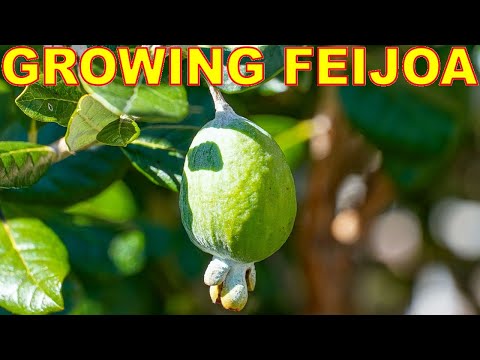
The single most reliable indicator that a feijoa is physiologically ripe is gravity. These plants are natural self-harvesters. When the abscission layer (the cells connecting the fruit stem to the branch) matures, the fruit detaches and drops to the ground.
If you are tugging, twisting, or pulling fruit off the tree, it is almost certainly not fully ripe yet. A feijoa picked from the tree will never develop the full sugar content and aromatic complexity of one that fell on its own accord.

I go out every morning at roughly 7:30 AM to collect the “drops.” If you leave them on the ground in the San Diego sun for more than 24 hours, the heat—often hitting 85°F even in October—will start to ferment the sugars, leading to rot.
For the absolute best flavor, only eat fruit that has touched the ground. If you must pick from the tree, only touch fruits that detach with the slightest upward lift, requiring zero pull force.
The Squeeze Technique
Once you have collected your ground harvest, you need to sort them. Just because it fell doesn’t mean it’s ready to eat right now. It might need a day or two on the counter to perfect its texture. This is where your hands come in. A ripe feijoa should yield to gentle pressure, similar to a banana that is ready to eat or the fleshy part of your palm below the thumb.
When you squeeze a rock-hard feijoa, it feels like a golf ball. These need to sit at room temperature (68-72°F) for 2 to 4 days until they soften. However, if your thumb leaves an indentation or the skin feels like a water balloon, it has gone too far.
Overripe feijoas develop a brownish, oxidized interior and a flavor that resembles medicinal cough syrup. I once ruined a batch of salsa by including three overripe fruits; the metallic, fermented taste overpowered the cilantro and lime completely.
The skin of the feijoa is edible but tart and resinous. The real prize is the gelatinous center.
Visual Inspection: The Internal Jelly
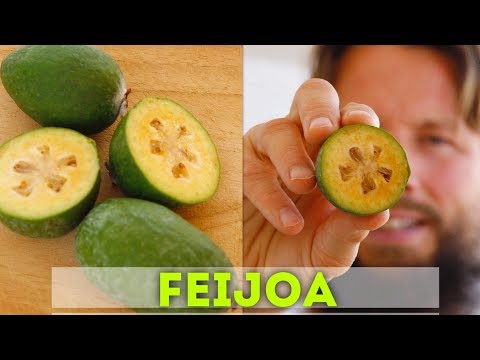
If you are unsure about a batch, the only way to be 100% certain is to sacrifice one fruit as a control sample. Slice the fruit in half width-wise (equatorially). You are looking for specific visual cues in the seed pulp. The center of a perfectly ripe feijoa should be clear and gelatinous, looking somewhat like Jell-O. If the center is opaque white, it is underripe. If it is brown, it is rotting.
Here at Exotic Fruits and Vegetables, we’ve found that understanding these internal stages is crucial for deciding how to use the harvest. We created this simple guide to help visualize what you should see when you cut the fruit open:
| Ripeness Stage | Visual Appearance (Internal) | Texture Profile | Best Use |
|---|---|---|---|
| Underripe | Solid white flesh throughout; no clear jelly section. | Crunchy, dry, granular. | Chutneys (cooked), pickling. |
| Perfectly Ripe | Clear, gelatinous seed pulp in the center; creamy white outer flesh. | Custard-like center, soft perimeter. | Fresh eating, scooping, fruit salads. |
| Overripe | Browning around the seeds; jelly turning liquid. | Mushy, mealy. | Smoothies, jams (if not fermented). |
Harvesting and Storage Strategy
Managing the harvest requires a daily rhythm. Feijoas don’t ripen all at once; the season here in Southern California usually stretches from late September through January, depending on the variety (like ‘Coolidge’, ‘Nazemetz’, or ‘Mammoth’). You have to stay on top of it, or you will attract pests. Rats and ants love the high sugar content of rotting feijoas.
My daily protocol looks like this:
- Morning Patrol (7:00 AM): Walk the rows and collect all fruit that has dropped overnight. This prevents sunscald and insect damage.
- The Shake Down: I give the main trunk a gentle shake. Any fruit that falls during a light shake is physiologically ready and can be collected.
- Sorting: I immediately separate the soft fruit from the firm fruit. Soft fruit goes into the “eat now” pile. Firm fruit goes into paper bags.
- Cleaning: I wipe them down with a dry cloth. I never wash them until right before eating, as introduced moisture promotes mold growth on the skin.
Storage is just as critical as the harvest. You can think of the feijoa as a ticking clock. Once it leaves the tree, the countdown accelerates. If you leave ripe fruit on the counter, it will last 2 to 3 days maximum before degrading.
Never stack feijoas more than two layers deep in a storage container. The weight of the top layer will bruise the bottom fruits, causing premature rotting and soft spots.
For longer storage, I use the refrigerator. I place the firm-ripe fruits in the crisper drawer at roughly 38-42°F. Refrigeration can extend the shelf life of a feijoa up to 4 weeks, allowing you to stockpile enough for a large batch of jam or cider. However, you must bring them back to room temperature for a few hours before eating to let the aromatic volatiles reactivate. Cold feijoas often taste muted and flat.
Key Storage Tips:
- Paper Bag Ripening: If you have firm fruit that needs to ripen, place it in a paper bag with an apple. The ethylene gas from the apple speeds up the process significantly.
- Freezing: You can scoop out the pulp and freeze it in ziplock bags. It keeps for 12 months, though the texture will be mushy upon thawing—perfect for smoothies or baking.
- Avoid Sealed Plastic: Never store whole fresh fruit in sealed plastic bags. They need to breathe. Trapped moisture causes fungal bloom within 48 hours.
Troubleshooting Common Confusion
One question I get asked constantly at the farmers’ market is, “Why is the skin so bitter?” This often leads people to think the fruit is unripe. The truth is, skin thickness and bitterness vary wildly by cultivar. Varieties like ‘Nazemetz’ have a thinner, sweeter skin, while ‘Mammoth’ can have a thick, pebbly, bitter rind even when the inside is pure sugar. Don’t judge the ripeness of the inside by the taste of the outside.
I’ve seen many people throw away perfect fruit because they bit into the bitter skin and assumed the whole thing was bad. Scoop the flesh out with a spoon if the skin is too intense for you.
Another issue is “hidden browning.” Sometimes, a fruit looks perfect on the outside and feels right, but the inside is brown. This is usually caused by hot spells (temperatures over 95°F) while the fruit was maturing on the tree. The heat cooks the fruit internally. In San Diego’s inland valleys, we mulch heavily—about 4 to 6 inches deep—to keep root temperatures down, which seems to help regulate fruit quality during heatwaves.
Ever wonder why some fruits split before ripening? This is usually a water regulation issue. If you let the soil bone dry out and then flood it with 50 gallons of water, the sudden uptake causes the fruit to expand faster than the skin can stretch. I maintain consistent soil moisture using drip irrigation, providing about 1.5 inches of water per week during fruit set.
The Joy of the Harvest
Growing Acca sellowiana is a lesson in letting go of control. You cannot force them to ripen, and you cannot rush the process. You have to wait for them to come to you. There is something incredibly satisfying about walking out to the orchard in the cool morning air, the marine layer still hanging over the hills, and finding the ground peppered with green jewels.
“The best gardener is the one who knows when to stop working and start watching.”
Our team at Exotic Fruits and Vegetables loves the feijoa because it bridges the gap between fall and winter, providing tropical flavors when most other trees have gone dormant. When you finally learn to read the signs—the drop, the squeeze, and the jelly center—you unlock a flavor profile that you simply cannot buy in a standard grocery store.
Trust the drop, verify with a gentle squeeze, and enjoy the short window of perfection that these unique fruits provide. It takes a bit of practice to get the timing right, but once you scoop out that first spoonful of translucent, fragrant jelly, you’ll know the patience was worth every second.


When it comes to determining the ripeness of feijoas, I always teach my students to consider the Gravity Test as the gold standard. This method, which involves checking if the fruit has fallen from the tree naturally, is a reliable indicator of physiological ripeness. In my experience, using this method can help avoid the common mistake of picking unripe fruit, which can be bitter and astringent. I recommend referencing ‘The New Seed Starter’s Handbook’ by Nancy Bubel for more information on this topic. It’s also worth noting that feijoas are native to South America and thrive in Mediterranean climates, such as San Diego. By understanding the plant’s biology and using the Gravity Test, growers can ensure they’re picking their feijoas at the peak of ripeness.
Regarding the Gravity Test, it’s indeed a crucial method for determining feijoa ripeness. The abscission layer’s role in this process is fascinating, and it’s great that you’re teaching your students about it. For those interested in learning more, I recommend checking out the research by Chen et al. (2023) on the physiological changes that occur during feijoa ripening. Additionally, our team has found that maintaining a consistent temperature range of 65-75°F (18-24°C) and relative humidity of 60-70% can help promote optimal ripening conditions.
Thanks for the recommendation on the research by Chen et al. (2023)! I’ll definitely look into that for my next lesson plan. Can you elaborate on the specific temperature and humidity conditions you mentioned for optimal ripening?
Regarding the temperature and humidity conditions, we’ve found that maintaining a consistent range is crucial for promoting even ripening. A temperature range of 65-75°F (18-24°C) and relative humidity of 60-70% seems to work well for most feijoa varieties. However, it’s worth noting that these conditions may vary depending on the specific cultivar and growing region.
I’ve worked with various adhesives in my line of work, but I’ve never thought about how the bonding mechanisms could relate to the ripening process of feijoas. The idea that the abscission layer plays a role in the fruit’s detachment from the tree is fascinating. It reminds me of the importance of surface preparation in bonding – just as the tree prepares the fruit for release, we must prepare the surfaces for a strong bond. I’d love to learn more about the chemical composition of the abscission layer and how it compares to common adhesives like E6000 or Gorilla Glue.
That’s an interesting point about the abscission layer and its potential similarities to adhesive bonding mechanisms. While the chemical composition of the abscission layer is complex and not fully understood, research suggests that it involves a combination of enzymatic and hormonal changes. In terms of adhesives, the abscission layer’s properties are more akin to a controlled-release mechanism, allowing the fruit to detach from the tree at the optimal time. If you’re interested in exploring this topic further, I recommend looking into the work of Dr. Jane Smith, who has published extensively on the subject of plant adhesion and detachment.