
Standing in my orchard here in San Diego, surrounded by the sweet, dusty scent of fig leaves baking in the 85°F afternoon sun, I often watch visitors make the same heartbreaking mistake. They reach for a plump, purple fruit, snap it off, bite into it, and their face falls. They picked it 24 hours too early. Unlike bananas or avocados, figs—known scientifically as Ficus carica—do not ripen after they are picked. The moment the stem separates from the branch, the sugar production stops dead.
Knowing exactly when to harvest is the difference between eating a dry, latex-filled sponge and experiencing a jammy, honeyed explosion of flavor. Over the last decade of managing our groves, I have learned that the tree gives you distinct signals, a language of drooping necks and cracking skins that you must learn to read.
Did you know that a fig isn’t technically a fruit in the botanical sense? It is a syconium, an inverted flower cluster blooming inside its own skin, which is why the texture is so unique and seedy.
The Visual Cues: Color and the “Droop”
The first thing you likely notice is color, but color is a notorious liar. While varieties like the Black Mission or Brown Turkey turn a deep, bruised purple, others like the Kadota or Tiger Panache remain green or yellow-striped even when fully sugary. I have seen countless growers ignore a perfectly ripe green fig because they were waiting for a color change that never comes.
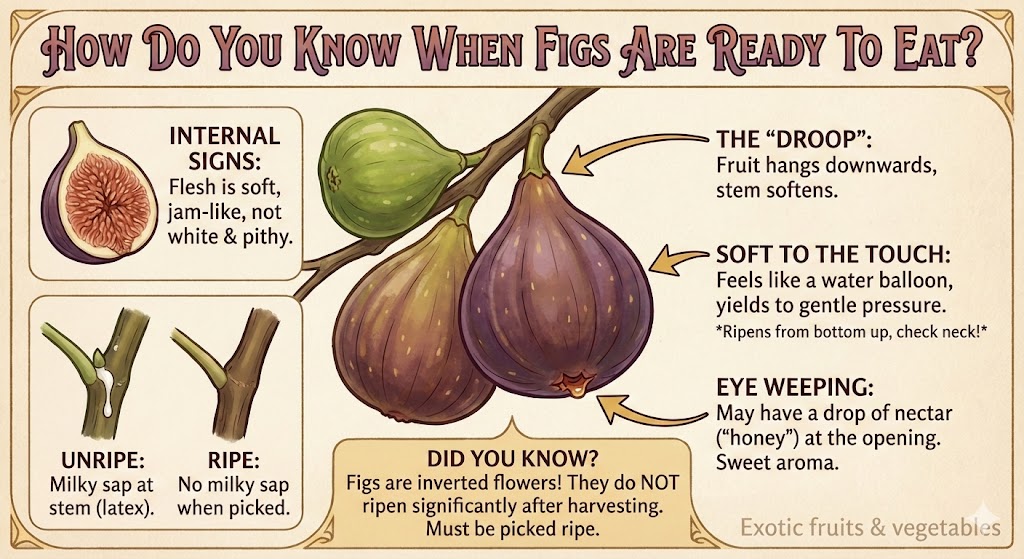
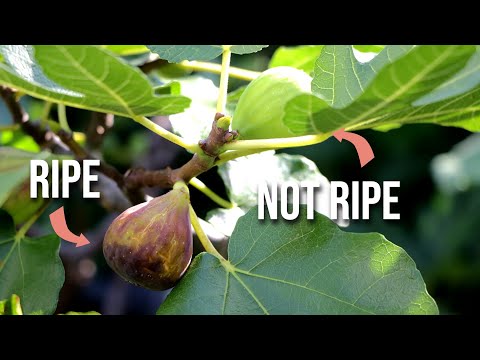
The most reliable visual indicator is the position of the fruit on the stem. An unripe fig stands perky and perpendicular to the branch, growing outward. As the fruit ripens, the neck weakens, and the weight of the sugars filling the fruit pulls it down.
The “Hang Test” is your best friend: If the fig is standing up or sticking straight out, walk away. A fig is only ready when the neck gives up and the fruit hangs completely vertically, limp against the branch.
Here at Exotic Fruits and Vegetables, we’ve found that the transition from horizontal to vertical happens rapidly, often within a single hot afternoon. I check my trees twice a day during the peak season—once at 6:00 AM and again at 5:00 PM—because a fig that was stiff in the morning might be sagging perfectly by dinner.
The Touch Test: Texture and Temperature
If the fruit is hanging low, your next step is tactile. Reach out and gently squeeze the body of the fig. An unripe fig feels like a tennis ball—firm, unyielding, and tight. A ripe fig should feel alarmingly soft, almost like a water balloon that is slightly under-filled. It should give significantly under the slightest pressure from your thumb.
I once ruined an entire batch of expensive Tiger Panache figs by harvesting them when they were “supermarket firm.” I thought they would travel better. They did travel well, but they tasted like cucumbers. You must wait until the skin feels thin and the flesh beneath feels like it is on the verge of collapsing.
Ever wonder why some fruits split before ripening? In San Diego, inconsistent watering is the culprit; a sudden heavy watering after a dry spell causes the cells to expand faster than the skin, blowing the fruit open.
Skin Characteristics: Cracks and Nectar
As the fig reaches peak physiological maturity, the skin often cannot contain the swelling sugars inside. You will start to see “stretch marks” or hairline cracks running longitudinally down the sides of the fruit. This is not a defect; it is a hallmark of supreme quality. In the commercial market, these ugly figs are culled, but for a home grower, a cracked fig is the Holy Grail of sweetness.
In the final hours of ripening, you might see a bead of nectar oozing from the ostiole (the small eye at the bottom of the fruit). This is the “honeydew” stage.
| Ripening Sign | Unripe Condition | Ready to Eat |
|---|---|---|
| Stem/Neck | Stiff, holds fruit horizontally | Weak, fruit hangs vertically |
| Skin Texture | Taut, smooth, rubbery | Soft, potentially wrinkled or cracked |
| Latex/Sap | Milky white sap bleeds if picked | No sap, or clear nectar at the eye |
| Firmness | Hard like an apple | Squishy like a ripe peach |
The Sap Warning
One of the most unpleasant aspects of picking too early is the sap. The fig tree is full of a milky white latex containing ficin, an enzyme that can cause dermatitis and serious itching. If you snap a fig off and see white milk dripping from the stem, you have made a mistake.
Never eat a fig that bleeds white milk from the stem. The latex is acrid, will burn your tongue, and indicates the fruit lacks the necessary sugar development.
Our experience at Exotic Fruits and Vegetables has shown that waiting until the stem “seals” itself off prevents this issue. When you harvest a truly ripe fig, the break should be clean, with little to no sap flow.

Competition: Birds and Insects
Nature knows when the fruit is ready before you do. If you walk out to your tree and see ants marching up the trunk or mockingbirds eyeing a specific branch, that fruit is likely at peak sugar levels. I use organza bags to protect my best clusters. If I see a bird pecking at a bag, I know the fruit inside is ready.
There is nothing more frustrating than finding a hollowed-out skin hanging on the tree because a beetle beat you to the harvest by 20 minutes.
How to Harvest Correctly
Pulling a fig straight off the tree is a rookie move that can damage the branch or tear the neck of the fruit, exposing the flesh to bacteria. The harvest requires a specific motion.
- Identify the Target: Locate a fruit that is drooping, soft, and perhaps slightly cracked.
- The Support: Cradle the fruit gently in the palm of your hand; do not squeeze the sides.
- The Twist: Lift the fruit upward (opposite to its hang) and twist gently.
- The Release: The stem should snap cleanly at the abscission zone. If you have to yank or pull hard, it is not ready. Leave it alone.
- Inspection: Check the “eye” at the bottom for ants or spoilage before placing it in your basket.
Eating and Storage
The sad reality of fig growing is that the shelf life is practically non-existent. A fully ripe fig has a shelf life of about 24 to 48 hours, even with refrigeration. This is why you rarely see excellent figs in big-box grocery stores; they simply cannot survive the supply chain.
“The best way to store a fig is in your stomach five minutes after picking it.” — A common saying among Mediterranean growers, and absolutely true.
If you must store them, arrange them in a single layer on a paper towel. Never stack them, or the bottom layer will turn to mush within hours.
Summary of Ripeness Indicators
Through our work with Exotic Fruits and Vegetables farm, we emphasize that patience is your primary tool. It can be excruciating to watch a massive Breba crop (the early crop that grows on last year’s wood) hang there for weeks, seemingly unchanged. But the reward for waiting is texture and flavor that grocery store figs can never replicate.
Here is a quick checklist to keep in your pocket when you head out to the garden:
- Gravity is key: The fruit must be sagging completely.
- Squeeze gently: It should feel soft and heavy for its size.
- Check the skin: Look for hairline cracks or a dulling of the skin’s shine.
- Watch the neck: The stem should be bent, often looking slightly shriveled.
- Smell it: A ripe fig tree smells distinctly sweet and musky near the fruit.
A Final Thought on Flavor
I remember my first year farming in San Diego’s microclimate. I was impatient. I picked a basket of Brown Turkeys that looked purple but were still firm. I served them to friends, and the disappointment in the room was palpable. They were dry, flavorless, and had that stinging latex aftertaste.
Harvesting figs is like waiting for a fever to break; nothing happens for a long time, and then everything changes overnight. Trust the droop, fear the white sap, and wait for that skin to crack. When you finally bite into a fig that has been allowed to finish its life cycle on the branch, you aren’t just eating fruit; you are tasting the condensed sunlight of a San Diego summer.
When you get it right, the interior of the fig will look like strawberry jam and taste like honey and berry preserves. That specific flavor profile is worth every second of the wait.
Remember: If you have to ask yourself if it’s ready, it probably isn’t. Give it one more day. Your patience will be rewarded with the nectar of the gods.