

There is nothing quite like the golden hour in San Diego. The way the sun dips over the Pacific, casting that warm, amber glow across my orchard, makes all the weeding, pruning, and early mornings worth it. Walking through the rows of my exotic fruit trees, I often stop in front of the Ficus carica—the common fig—and just marvel at it. To the untrained eye, it’s just a knobby, pear-shaped fruit hanging among lobed leaves. But to those of us with dirt permanently under our fingernails, it’s a biological miracle.

It is the ultimate “ick” factor of the fruit world. The idea of a wasp laying eggs in fig fruit has terrified vegetarians and confused fruit lovers for generations. So, let’s grab a cup of coffee—or maybe a glass of wine, considering the time of day—and dig into the truth about figs, wasps, and what you are actually eating.
The Hidden Romance: Understanding the Syconium
First off, we need to get something straight: biologically speaking, a fig isn’t actually a fruit. I know, I know, it sounds like I’m splitting hairs, but stick with me. The fig is technically a syconium. Imagine a bouquet of flowers, but instead of blooming outward for the bees and butterflies to see, the petals have folded inward, creating a hollow, fleshy ball lined with hundreds of tiny, microscopic flowers facing the center. When you bite into a fig, those little crunchy bits aren’t seeds in the traditional sense; they are the withered ovaries of these tiny flowers.
Now, because these flowers are hidden inside a vault, wind can’t pollinate them, and neither can your average honeybee. The plant needed a specialist. Enter the Agaonidae, commonly known as the fig wasp. This relationship is millions of years old—a perfect example of obligate mutualism. The fig cannot reproduce without the wasp, and the wasp cannot live without the fig.
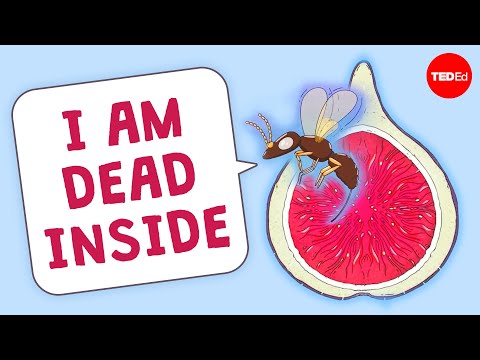
Here is how the drama unfolds. The female wasp, who is smaller than a gnat (we aren’t talking about those yellow jackets that chase you at picnics), smells a chemical signal from a receptive fig. She finds the ostiole, which is that tiny little eye or opening at the bottom of the fruit. The passage is incredibly tight. As she squeezes her way in, she usually rips off her wings and antennae. She is on a one-way mission. Once inside the dark cavern of the syconium, she pollinates the flowers and, in some cases, lays her eggs. This is where the story diverges depending on the type of fig, and this is crucial for your peace of mind.

In the wild, and with specific varieties like the Smyrna (or Calimyrna), the wasp lays eggs in the “male” figs (caprifigs), which we don’t eat. The larvae hatch, mate, and the males—who are born blind and wingless—tunnel out a path for the females and then die. The females fly out, covered in pollen, and go looking for a new home. If they accidentally fly into a “female” edible fig, they get confused. They try to lay eggs, but the style of the female flower is too long for their ovipositor. They fail to lay eggs, but they succeed in pollinating the fruit.
So, the wasp dies inside. But—and this is the big “but”—you aren’t chewing on a carcass.
Crunching the Numbers: Do We Actually Eat Wasps?
If I had a dollar for every time someone put a fig back in the crate because they imagined crunching on an insect thorax, I’d have retired to a villa in Tuscany by now. Here is the science that makes it all okay.
When that female wasp dies inside an edible fig, she doesn’t just sit there. The fig produces a powerful enzyme called ficin. Think of ficin as the plant’s digestive system. It breaks down the wasp’s exoskeleton completely, turning the chitin into protein. By the time the fruit is ripe and sitting on my kitchen counter, the wasp has been fully metabolized. She has become part of the fruit’s nutritional profile.
To put it simply: you aren’t eating a wasp; you are eating the memory of a wasp.
However, here in San Diego, and across most of the commercial US production, we cheat the system. Most of the figs you buy at the grocery store—like the Black Mission, Brown Turkey, or Kadota—are what we call “Common Figs.” These varieties are parthenocarpic. That’s a fancy scientific way of saying they don’t need pollination to bear fruit. They swell up and ripen without a wasp ever checking in.
Here is a breakdown of the varieties I’ve experimented with in my orchard soil:
| Fig Variety | Type | Wasp Required? | Flavor Profile |
| Black Mission | Common | No | Sweet, jammy, earthy. The San Diego classic. |
| Calimyrna | Smyrna | Yes | Nutty, honey-like, amber flesh. |
| Brown Turkey | Common | No | Mild sweetness, robust, less intense. |
| Kadota | Common | No | Creamy, less sweet, thick skin. Good for canning. |
| King (San Pedro) | Intermediate | Variable | Breba crop (first crop) needs no wasp; main crop does. |
As you can see, unless you are eating a Calimyrna (often sold dried), there is a 99% chance no wasp ever set foot (or wing) inside your fruit.
My San Diego Orchard: Why I Choose What I Choose
Farming exotic fruits in Southern California is a dream, but it’s also a puzzle. We have these microclimates that can shift from coastal fog to desert heat within ten miles. I grow various things—dragon fruit, cherimoya, star fruit—but the fig tree, or Higo as my neighbors call it (using the Spanish name which is very common here), is the backbone of the garden.
I mostly stick to Common figs for a practical reason: reliability. To grow Smyrna types, I would need to plant inedible Caprifigs (the male trees) nearby to host the wasps. It’s a lot of real estate to dedicate to trees that don’t produce food for humans, just to keep a colony of bugs alive. Plus, if the wasp population crashes—which can happen with extreme temperature swings—my crop fails.
However, I do have a few trees that require pollination because, frankly, the taste is superior. A wasp-pollinated fig has a nuttiness and a texture that the parthenocarpic ones just can’t match. The seeds are viable, which gives them a satisfying crunch, like a raspberry.
When I’m out there harvesting, I’m looking for very specific signs. You don’t just yank a fig off the tree; it won’t ripen once picked. You have to wait for the tree to surrender it.
Here is my checklist for the perfect harvest:
The Neck Droop: The fruit should hang heavy, bending at the neck as if it’s tired.
The Cracks: I look for “stretch marks” on the skin. It implies the sugar content is bursting out.
The Touch: It should feel like a soft water balloon, barely holding itself together.
The Tear: When I pull it, the skin at the stem should tear slightly, oozing a drop of white, sticky sap.
That sap, by the way, contains that enzyme ficin I mentioned earlier. It can be a skin irritant if you get too much on you, causing “fig burn,” so I always wear long sleeves even in the July heat.
From Tree to Table: Getting Over the “Bug Factor”
I want to encourage you to look at this differently. In our modern, sanitized world, we want our food to be sterile. We want apples with wax coatings and carrots that look like they came from a factory. But real food—food with soul—is part of an ecosystem.
The fig and the wasp are a beautiful example of nature’s complexity. Without the wasp, the fig tree species would have gone extinct millions of years ago. The fact that the fruit absorbs the insect is just nature’s way of recycling energy.
When I slice open a fresh Anjeer (that’s the Persian name, and we have a huge Persian community here in San Diego who truly appreciate a good fig), I’m not looking for bugs. I’m looking for that deep red, jelly-like interior that signals pure sweetness.
Why you should embrace the fig, history and all:
Nutritional Powerhouse: They are high in fiber, potassium, and antioxidants.
Evolutionary Wonder: You are eating a plant that has survived by making a pact with an insect.
Culinary Versatility: grilled with goat cheese, wrapped in prosciutto, or just eaten sun-warm right off the branch.
So, next time you see a basket of figs at the market, don’t think about the wasps. Think about the sunshine, the history, and the incredible biological engineering that went into creating that packet of sugar. And if you’re eating a Black Mission or a Brown Turkey, you can rest easy knowing the only thing inside that fruit is deliciousness.
But between you and me? Even if I’m eating a Calimyrna, I don’t mind. It’s just a little extra protein, right?


