
There is nothing quite as heartbreaking in the garden as watching your anticipation turn into compost on the ground. You watch those little green gems swell, dreaming of the honey-sweet jam or the fresh snacks to come, and then one morning you walk out to find half the crop lying in the dirt. I have been farming here in San Diego for years, and I still feel a pang of sadness when I see my Ficus carica (the common fig) shedding its load prematurely.
Here at Exotic Fruits and Vegetables, we’ve found that fig trees are incredibly communicative plants; they don’t just drop fruit to be difficult, they are sending a distress signal. When your tree, often called “higos” by my local neighbors or “wu hua guo” by friends in the Asian community, drops its fruit, it is usually making a calculated survival decision. It is prioritizing its own life over its offspring.
Why does a tree work so hard to grow fruit just to discard it before the finish line?
Understanding the specific biological triggers for this behavior is the only way to stop it. We aren’t dealing with a mystery here; we are dealing with physiology. Let’s dig into the dirt and figure out exactly why your harvest is ending up on the floor.
The “Breba” Crop Phenomenon
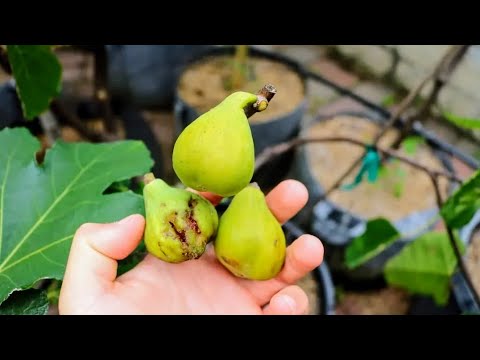
Before you panic, you need to identify which crop is falling. Fig trees in our mild Southern California climate often produce two distinct crops. The first, known as the “Breba” crop, grows on the previous year’s wood and ripens in early summer. The main crop forms on new growth and ripens in late summer or fall.
Many varieties, like the popular ‘Mission’ or ‘Brown Turkey’, will naturally shed a large percentage of their Breba crop if the spring weather fluctuates too wildly.
Think of the Breba crop as a “test run” for the tree. If the tree doesn’t have enough stored energy from the previous winter, it will cut its losses. I once panicked because my ‘Desert King’ dropped 60% of its early fruit during a particularly gloomy “May Gray.” I thought the tree was dying. It wasn’t. It was just conserving resources for the main event later in the year. If your drop is happening in May or June, it might just be biology doing its job.
Water Stress: The Primary Culprit
If I had to bet my tractor on the reason your figs are dropping, I would put my money on water issues every single time. Figs have a shallow, spreading root system that is surprisingly sensitive to moisture fluctuation.
Inconsistent watering is far more damaging than consistently low water; the shock of dry-to-wet cycles causes the tree to panic and abort fruit.
In San Diego’s dry heat, especially during the Santa Ana winds where humidity drops below 10%, a fig tree can transpire gallons of water a day. If the soil goes bone dry, the tree closes its stomata to save itself. When the tree goes into survival mode, the first thing it jettisons is the energy-expensive fruit.
I learned this the hard way three years ago. I had a timer malfunction on my irrigation line for a row of ‘Panache’ (Tiger Stripe) figs. They went without water for 12 days during a 95°F heatwave. When I finally fixed it and flooded the zone, the sudden influx of water caused the remaining fruit to swell too fast and drop, while the others had already shriveled. I lost 85 pounds of potential harvest in one week.
To prevent this, maintain soil moisture at a depth of 12 to 18 inches. You want the soil to feel like a wrung-out sponge, not a swamp and not a dustbowl.
The Mulch Solution
The most effective way to regulate this moisture is heavy mulching. I don’t mean a polite sprinkling of bark; I mean a heavy blanket. I apply 4 to 6 inches of arborist wood chips around the base of every tree, extending out to the drip line. This reduces evaporation by nearly 70% and keeps the root zone temperature stable.
Nutritional Imbalances
Our experience at Exotic Fruits and Vegetables has shown that many backyard growers kill their harvest with kindness, specifically in the form of Nitrogen. It is natural to want to feed your plants, but figs are not heavy feeders in the same way corn or tomatoes are.
Applying high-nitrogen fertilizers, like standard lawn food (29-0-4), signals the tree to produce lush green leaves at the expense of the fruit.
When a fig tree gets a massive dose of nitrogen, it switches gears from reproduction (fruit) to vegetative growth (leaves and branches). The tree literally forgets about the fruit it is holding. It’s like giving a teenager a double shot of espresso and asking them to sit still; all that energy has to go somewhere, and it usually goes into shooting up new branches while the fruit gets left behind.

Pollination and Variety Issues
This is where things get technical. Did you buy a tree from a reputable local nursery, or did you grab a cutting from a neighbor’s “mystery tree”? Not all figs are self-fertile.
Smyrna varieties require a specific wasp (Blastophaga psenes) to enter the fruit and pollinate it; without this, the fruit will grow to the size of a marble and then drop abruptly.
Here in San Diego, the fig wasp is present in some areas (like around older orchards in Escondido or Vista) but absent in others. If you planted a ‘Calimyrna’ and you live in a new development downtown, you likely don’t have the wasps. The fruit will never ripen. It will yellow and fall off every single year.
| Fig Type | Pollination Requirement | Common Varieties | Drop Risk Reason |
|---|---|---|---|
| Common Fig | No pollination needed | Brown Turkey, Black Mission, Kadota, Celeste | Water stress, heat, age |
| Smyrna | Requires pollination (Caprification) | Calimyrna, Marabout | Lack of fig wasps (Abortive drop) |
| San Pedro | Breba needs none; Main crop needs pollination | Desert King, Lampeira | Main crop drops if no wasps present |
If you have a persistent drop of the main crop year after year, check your variety. You might need to graft a “Common” variety onto your rootstock to get edible fruit.
Environmental Stress and Pests
Root-knot nematodes are microscopic roundworms that attack the roots, causing galls or swelling that block nutrient uptake. In sandy soils, nematodes are the silent killers of fig production. If your tree looks thirsty even after you water it, and the fruit is dropping, dig down and check the roots. If they look like knobby, swollen arthritic fingers rather than smooth cords, you have nematodes.
There isn’t a cure for nematodes in established trees, but you can manage them. I add thick layers of compost and crab meal (the chitin helps suppress nematode populations) to the soil surface. This boosts the root mass enough to outpace the damage.
I once tried to save a heavily infected tree with chemical drenches. It was a waste of money and time. Organic matter and vigorous root growth are the only real defenses.
Temperature Fluctuations
Figs love heat, but they hate being baked unexpectedly. If we have a cool, overcast June (“June Gloom”) followed immediately by a 100°F July day, the sudden stress can cause drop.
Ever notice how you feel sluggish and sick when the weather changes too fast? Your plants feel the exact same physiological shock.
Troubleshooting Your Drop: A Step-by-Step Guide
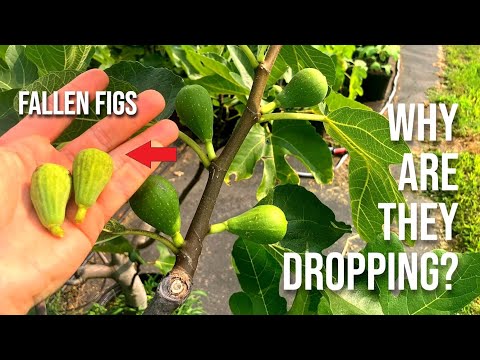
If you are standing in your orchard staring at fallen fruit right now, here is the protocol I follow to diagnose the issue:
- Check the Soil Moisture: Dig down 6 inches. Is it dusty? Muddy? If it’s dry, deep soak immediately. If it’s swampy, stop watering for two weeks.
- Inspect the Fallen Fruit: Cut open a dropped fig. Is it dry and hollow? That indicates lack of pollination (if it’s a Smyrna type) or severe drought. Is it moldy? That could be souring (fermentation) from too much humidity or insect entry.
- Examine the Leaves: Are they yellowing? You might have a nitrogen deficiency. are they dark green and huge? You have nitrogen toxicity.
- Look for Pests: Check the “eye” (ostiole) of the fig. Are there beetles or ants? They can introduce pathogens that cause the fruit to sour and drop.
- Evaluate the Variety: Verify exactly what tree you have. If you don’t know, post a picture of the leaf and fruit on a local forum or take it to a master gardener.
The Path to a Full Basket
Growing exotic fruit is a partnership with nature, not a command over it. You cannot force a tree to hold fruit it cannot support. Fruit drop is often a self-preservation mechanism that saves the tree from exhaustion.
As fruit enthusiasts at Exotic Fruits and Vegetables, we often tell our visitors that patience is the most critical fertilizer. A young tree (under 3 years old) will drop fruit simply because it isn’t physically ready to carry the load, much like a toddler isn’t ready to carry a backpack full of bricks.
My best harvest came from a ‘Violette de Bordeaux’ that I ignored for the first three years. I let it establish a massive root system, and in year four, it rewarded me with over 30 pounds of jammy, berry-flavored figs.
Don’t be discouraged by the drop. Adjust your watering to be deep and infrequent (every 7-10 days in summer), mulch heavily to stabilize the root environment, and ensure you aren’t over-fertilizing with nitrogen.
Gardening is the slowest of the performing arts.
Give your tree the stability it craves, and it will eventually give you the harvest you deserve. Keep your hands in the dirt and your eyes on the leaves. The figs will come.



From a commercial perspective, fig production can be a lucrative business. We’ve seen yields of up to 20 tons per hectare, with a wholesale price of around $2.50 per pound. However, it’s crucial to manage water stress and nutritional imbalances to prevent fruit drop. We’ve implemented a drip irrigation system and use a balanced fertilizer to ensure optimal growth. Our cost breakdown is around $1,500 per hectare for seedlings, $3,000 for irrigation, and $2,000 for labor. With a revenue projection of $40,000 per hectare, it’s a worthwhile investment. We’ve also explored grafting and breeding programs to improve yields and disease resistance.