
Let me tell you about the most torturous three years of my farming career. Picture this: you’ve just planted your first finger lime tree, and you’re standing there like a proud parent, practically bouncing on your toes with excitement. You’ve read all the articles, watched the YouTube videos, and everyone says finger limes are the next big thing. So naturally, you’re expecting fruit next season, right? Maybe the season after that at the latest?
Well, grab a comfortable chair because I’m about to shatter that fantasy with a healthy dose of reality. My first finger lime tree took four agonizing years to produce its first fruit. Four years! I checked that tree so obsessively that my wife started joking I should move my office to the grove. Every morning, I’d march out there with my coffee, inspect every branch, and mutter things like “Come on, just one little flower. That’s all I’m asking for.”
The waiting nearly drove me to sell the whole operation and go back to growing boring old tomatoes. But here’s the thing about finger limes – when they finally decide to fruit, they make the wait absolutely worth it. That first harvest was like Christmas morning, winning the lottery, and your favorite team winning the championship all rolled into one magical moment.
The Reality Check: Why Patience Isn’t Optional
Here’s what nobody tells you upfront about finger lime cultivation: these trees operate on their own timeline, and they couldn’t care less about your business plan or your eagerness to start selling “citrus caviar” at the farmer’s market. Think of finger limes as the wise old tortoise in the citrus world – slow to start, but incredibly rewarding once they hit their stride.
Most finger lime trees grown from seed will take anywhere from 4 to 7 years to produce their first fruit. Yes, you read that right – up to seven years. I learned this the hard way when I started my grove with a mix of seedlings and grafted trees, not fully understanding the massive difference in fruiting timelines.

During those early years, I became somewhat of a finger lime detective. I’d examine every tiny bud, looking for signs of flower development. I started keeping detailed journals, noting growth patterns, seasonal changes, and any hint of reproductive activity. My neighbors probably thought I’d lost my mind, photographing twigs and measuring branch growth like some kind of citrus scientist.
The breakthrough moment came in early spring of year four. I was doing my usual morning inspection when I spotted something that made my heart skip a beat – tiny, almost microscopic flower buds clustered along a branch. They were so small I almost missed them, but there they were, finally proving that my patient (and slightly obsessive) care was paying off.
Factors That Make or Break Your Timeline
After growing finger limes for eight years now, I’ve identified several critical factors that can dramatically affect when your trees will start producing fruit. It’s not just about time – it’s about creating the perfect storm of conditions that encourage these finicky trees to shift from vegetative growth to reproductive mode.
Tree variety plays a huge role in fruiting timeline. Here’s what I’ve observed in my own grove:
Fruiting Timeline by Tree Type and Variety
| Tree Type | Variety | First Fruit | Peak Production | Special Notes |
|---|---|---|---|---|
| Grafted | Red Champagne | 2-3 years | 4-5 years | Earliest producer in my experience |
| Grafted | Emerald | 3-4 years | 5-6 years | Consistent, reliable fruiting |
| Seedling | Mixed varieties | 4-7 years | 6-8 years | Highly variable, genetic lottery |
| Grafted | Crystal | 2-4 years | 4-6 years | Weather dependent, sensitive to stress |
The growing conditions you provide can either accelerate or delay fruiting significantly. I’ve learned that finger limes are incredibly sensitive to stress, and stressed trees simply won’t fruit. It’s like they’re saying, “Hey, I’m too busy trying to survive to worry about making babies right now.”
My most successful approach involves these key strategies:
- Consistent watering schedule: Never let them get bone dry, but never let them sit in soggy soil
- Balanced fertilization: Too much nitrogen delays fruiting by promoting excessive vegetative growth
- Proper pruning: Light pruning to encourage branching without stressing the tree
- Pest management: Healthy trees fruit earlier than pest-stressed trees
- Microclimate control: Protecting from extreme weather and providing optimal light conditions
The fertilization piece was a game-changer for me. In my early years, I was feeding my finger limes like they were teenagers going through a growth spurt – lots of nitrogen-rich fertilizer to promote rapid growth. What I didn’t realize was that I was actually sabotaging my own timeline. Trees loaded with nitrogen focus all their energy on making leaves and branches instead of flowers and fruit.
The lightbulb moment came when I switched to a lower-nitrogen, higher-phosphorus fertilizer blend specifically designed for fruiting citrus. Within six months, I started seeing flower buds on trees that had been vegetative for years. Sometimes the solution is counterintuitive – less aggressive feeding actually leads to faster fruiting.
Climate and seasonal patterns also play a crucial role that took me years to fully appreciate. Finger limes need a period of cooler weather to trigger their flowering response. In my region, this happens during our mild winter months when temperatures drop into the 50s and 60s. Trees that don’t experience this natural cooling period often delay fruiting by another full year.

The Sweet Reward: What to Expect When They Finally Fruit
When your finger lime trees finally decide to grace you with their first fruit, it’s an experience that makes all those years of waiting feel like a distant memory. But here’s what you need to know about that first harvest – it’s going to be small, and that’s completely normal.
My first-year fruiting trees typically produce between 10-20 finger limes each. It’s not much, but each fruit feels like a precious gem. I remember harvesting my first batch with surgical precision, treating each lime like it was made of spun gold. My wife laughed at me, but I didn’t care – those first fruits represented years of patience, learning, and persistent hope.
The flavor development in those early fruits taught me another valuable lesson. First-year fruits from young trees often don’t have the complex flavor profile that mature trees develop. They’re good, don’t get me wrong, but they lack the intensity and nuanced taste that comes with tree maturity. It’s like comparing a young wine to a well-aged vintage – both enjoyable, but the older one has depth and character that only time can create.
Here’s what I typically see in terms of production increases:
- Year 1 of fruiting: 10-20 fruits per tree, learning the harvest timing
- Year 2 of fruiting: 30-50 fruits per tree, flavor complexity improves
- Year 3 of fruiting: 50-100 fruits per tree, consistent quality develops
- Mature production: 100-300 fruits per tree, depending on variety and care
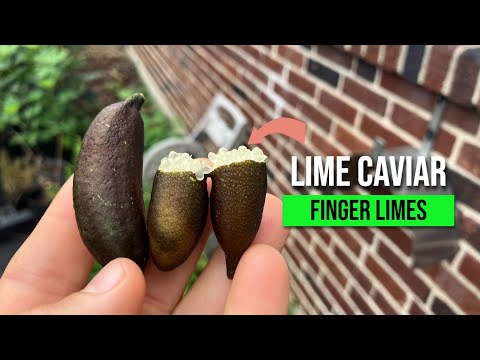
The harvesting process itself becomes an art form. Finger limes don’t all ripen at once – they’re ready over a period of several weeks. I’ve learned to judge ripeness by feel rather than just color. A ripe finger lime gives slightly when gently squeezed and will practically fall into your hand when twisted gently. Harvest too early, and the vesicles inside won’t have developed their signature “pop.” Wait too long, and they become mushy and lose their appeal.
One of the most satisfying aspects of finally reaching production is the market response. When I brought my first finger limes to the local farmer’s market, I watched customers’ faces light up when they tasted them. Chefs started calling, asking about bulk orders. High-end grocery stores wanted to feature them in their specialty produce sections. Suddenly, all those years of patient waiting translated into a premium crop that commanded premium prices.
But beyond the financial rewards, there’s something deeply satisfying about mastering the cultivation of such a unique and challenging crop. Every finger lime harvest reminds me that good things really do come to those who wait – and work, and learn, and adapt, and sometimes obsessively check their trees every morning with a cup of coffee in hand.
So, how long does it take for a finger lime to fruit? The honest answer is: longer than you want, but not as long as you fear. And when that first harvest finally arrives, you’ll understand why these amazing little fruits are worth every minute of the wait.