
The first time I handed a finger lime to a customer at the farmers’ market, they just stared at it like I’d given them a small green alien. “Um… what exactly do I do with this?” they asked, turning the peculiar elongated fruit over in their hands. I couldn’t blame them. These Australian native citrus fruits don’t come with an instruction manual, and they certainly don’t look like anything you’d instinctively know how to eat.
But once I sliced that Citrus australasica open and those tiny, jewel-like vesicles tumbled out, their eyes lit up with wonder. “It’s like citrus caviar!” they exclaimed. And that, my friends, is exactly why the Aboriginal peoples’ traditional name for these bushfood treasures has evolved into the popular moniker “caviar limes.”
After growing these remarkable microcitrus fruits and experimenting with countless ways to enjoy them, I’ve become something of an evangelist for proper finger lime consumption. There’s a right way and a wrong way to approach these native lime pearls, and knowing the difference transforms them from a confusing novelty into a culinary revelation. Let me share everything I’ve learned about extracting, preparing, and enjoying these spectacular citrus gems.
The Anatomy Lesson: Understanding What You’re Working With
Before we dive into eating these Australian finger limes, you need to understand their unique structure. Unlike conventional citrus where you peel away the skin to find segmented flesh, Citrus australasica operates completely differently. Think of it as nature’s most elegant packaging system – a slender cylindrical case containing hundreds of tiny, spherical juice vesicles that look and feel remarkably like fish roe.
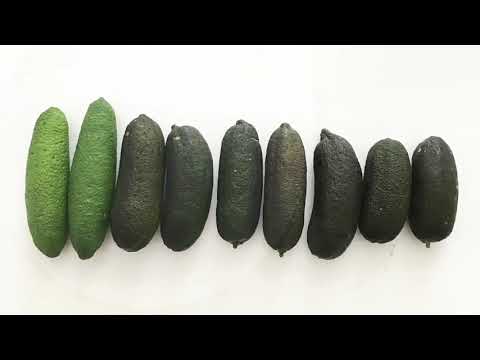
The outer skin of these caviar limes ranges in color depending on variety – from dark burgundy to bright green, yellow-green to nearly black. Regardless of exterior appearance, the skin is relatively thin but tough, protecting the precious cargo inside. This rind contains aromatic oils that smell wonderfully citrusy when you score it, but it’s not particularly pleasant to eat on its own. Some varieties have smoother skin while others feature tiny bumps, but texture doesn’t significantly affect the eating experience.

The texture is what really sets these native Australian citrus fruits apart. When you scoop out those vesicles, they hold together beautifully, maintaining their individual spherical shapes until you bite them. Then – pop! – they burst with flavor. This unique characteristic makes them absolutely irresistible as a garnish and incredibly fun to eat straight.
The Basic Technique: Extracting Those Precious Pearls
Alright, let’s get to the practical part. You’ve got your Citrus australasica in hand – now what? The extraction process is remarkably simple once you’ve done it a few times, though I’ll admit my first attempts were clumsy and wasteful.
Method 1: The Classic Cut and Squeeze
This is my go-to technique for quickly accessing those citrus caviar pearls:
- Wash the fruit thoroughly under cool running water, especially if you’re not sure about pesticide use (my fruits are organic, but you never know with store-bought specimens)
- Place the finger lime on a cutting board and use a sharp paring knife to slice off approximately one-quarter inch from one end – just enough to expose the vesicles inside
- Hold the fruit over your target – whether that’s a bowl, your hand, or directly over your dish – and gently squeeze from the uncut end toward the opening, like squeezing toothpaste from a tube
- Watch the magic happen as those beautiful pearls tumble out in a glistening cascade of citrus brilliance
The key is gentle, steady pressure. Squeeze too hard and you’ll rupture some of those precious vesicles, losing their spectacular visual appeal and that satisfying pop. Squeeze too gently and you’ll leave half the fruit inside the skin, wasting your investment.
Method 2: The Full Split
For situations where you want complete control or need to extract every last vesicle, I use this approach:
- Cut the caviar lime lengthwise down the middle, creating two halves
- Use a small spoon or butter knife to gently scoop out the vesicle clusters
- This method gives you more precise control and wastes less fruit
- It’s particularly useful for smaller or oddly-shaped specimens
Method 3: The Cross-Section Showcase
When I’m serving these native lime fruits at tastings or demonstrations, I use this dramatic presentation:
- Slice the fruit into rounds, creating cross-sections about a quarter-inch thick
- Each slice showcases the vesicles in their natural arrangement, creating a stunning visual
- Guests can either squeeze the rounds like miniature citrus wedges or bite directly into them
- This works best with larger, plumper fruits
Here’s something I learned the hard way: timing matters. These Australian finger limes are best prepared immediately before use. Unlike regular lime juice that you can squeeze ahead of time, those exposed vesicles begin losing their textural integrity within 30-60 minutes. They’ll still taste fine, but you lose that magical popping sensation that makes them so special.
Culinary Applications: From Simple to Sophisticated
Now that you know how to extract those magnificent microcitrus pearls, let’s talk about the nearly infinite ways to enjoy them. I’ve spent countless hours in my kitchen experimenting, and I’ve supplied these fruits to dozens of creative chefs who’ve pushed boundaries I never imagined.
Straight Up: The Purist’s Approach
Honestly? Sometimes the best way to eat finger limes is the simplest. I regularly just cut one open and squeeze the vesicles directly into my mouth for a burst of pure, unadulterated citrus intensity. It’s like nature’s Sour Patch Kids, but infinitely more sophisticated. When you grow these fruits yourself and know they’re at peak ripeness, this direct consumption method lets you appreciate their complex flavor profile without any distractions.
Seafood Synergy: The Natural Pairing
These caviar limes earned their nickname for good reason – they’re absolutely spectacular with seafood. The combination of their caviar-like appearance, citrus brightness, and bursting texture makes them perhaps the perfect seafood accompaniment. Here’s how I use them:
My favorite application involves fresh oysters. Simply shuck your oyster, add a small spoonful of Citrus australasica pearls, and slurp. The citrus complements the brininess perfectly, and the textural interplay between creamy oyster and popping vesicles is absolutely incredible. I’ve served this combination at farm events, and it converts skeptics into believers every single time.
For cooked seafood, I often garnish grilled fish with a generous sprinkle of these native lime pearls just before serving. The vesicles add visual drama, bright acidity, and textural interest. I particularly love them with salmon, scallops, and delicate white fish like halibut or snapper. The heat from the fish warms the vesicles slightly without destroying their structure, releasing even more aromatic oils.
Ceviche represents perhaps the ultimate showcase for these Australian finger limes. Instead of marinating fish in regular lime juice, I use conventional citrus for the marinade but top the finished dish with fresh caviar lime pearls. This preserves their texture while adding incredible visual appeal and flavor bursts throughout the dish.
Cocktails and Beverages: Liquid Innovation
The craft cocktail movement has absolutely embraced these native citrus fruits, and I supply several high-end bars that feature them in signature drinks. The vesicles work beautifully in cocktails because they:
- Add visual drama that photographs beautifully for social media (important for modern bars)
- Provide bursts of flavor throughout the drinking experience rather than just mixing in uniformly
- Float beautifully in champagne, prosecco, and other sparkling beverages
- Create a memorable, distinctive element that differentiates premium cocktails
My personal favorite is dead simple: champagne with Citrus australasica pearls. Just drop a teaspoon of those gorgeous vesicles into a flute of good bubbly and watch them dance in the carbonation. Each sip delivers little explosions of citrus that perfectly complement the wine’s acidity.
For non-alcoholic applications, I love adding them to sparkling water with fresh mint, or floating them in iced tea for an elegant warm-weather refreshment. The visual appeal alone elevates even the simplest beverage.
Desserts and Sweet Applications: Unexpected Brilliance
This might surprise you, but these caviar limes shine brilliantly in desserts. Their tartness cuts through rich, sweet flavors while adding textural intrigue. I’ve experimented extensively in this arena:
Cheesecake gets an incredible upgrade when you garnish each slice with a spoonful of finger lime pearls. The creamy richness needs that acidic counterpoint, and the little bursts of citrus elevate every bite. I make a simple citrus syrup to lightly sweeten the vesicles before using them this way.
Dark chocolate and Citrus australasica form an unexpectedly perfect partnership. I’ve created truffles with finger lime pearls suspended in the ganache, and the combination of bitter chocolate and tart citrus is absolutely addictive. For a simpler approach, just scatter vesicles over chocolate tart or mousse.
Pavlova, that magnificent meringue dessert, becomes even more spectacular when topped with whipped cream, berries, and a generous handful of these native lime pearls. The textural contrast between crispy meringue, soft cream, and popping vesicles is simply outstanding.
Here’s a comparison of how different applications showcase these microcitrus fruits:
| Application Category | Best Varieties | Preparation Style | Flavor Impact | Visual Impact | Textural Role |
|---|---|---|---|---|---|
| Raw Seafood | Green or Pink varieties | Fresh, uncooked | High – direct citrus hit | Spectacular | Popping contrast |
| Cooked Seafood | Pink or Red varieties | Warm garnish | Medium – mellowed by heat | High | Softened pop |
| Cocktails | Any colorful variety | Fresh, chilled | Medium – distributed | Very High | Suspended pop |
| Desserts | Pink or Red varieties | Sometimes sweetened | High – cuts richness | High | Surprising pop |
| Salads | Green varieties | Fresh, cold | High – bright accent | Medium | Crisp pop |
Practical Tips and Storage Wisdom
Let me share some practical knowledge I’ve accumulated through both growing and consuming massive quantities of these Australian finger limes.
Selecting Ripe Fruit
When you’re purchasing Citrus australasica (whether from me at the market or elsewhere), look for these quality indicators:
- Firm but slightly yielding to gentle pressure – rock hard fruits aren’t ripe, mushy ones are past prime
- Vibrant, glossy skin without shriveling or brown spots
- Feels heavy for its size, indicating juicy vesicles inside
- No soft spots or signs of mold, particularly around the stem end
Storage Strategies
Whole, uncut caviar limes store remarkably well in your refrigerator’s crisper drawer. I’ve kept them for three to four weeks this way without significant quality loss. Just keep them in a plastic bag or container to prevent moisture loss.
Once cut, however, you’re on the clock. Exposed vesicles deteriorate quickly, so plan to use them within a few hours of extraction. If you absolutely must store extracted pearls, keep them in an airtight container in the refrigerator and use within 24 hours. The texture won’t be quite as spectacular, but they’ll still be usable.
Can you freeze them? Yes, but with caveats. Frozen and thawed Citrus australasica vesicles lose their magical popping texture entirely. However, they retain their flavor, so I sometimes freeze them for use in cooked applications, marinades, or anywhere texture isn’t critical. Just squeeze out the pearls, freeze them in small portions, and use as needed.
Dealing with Seeds
Unlike their conventional citrus cousins, these native lime fruits typically contain very few seeds. When you do encounter them, they’re small and easy to spot among the translucent vesicles. I just pick them out as I notice them – no big deal.
Quantity Guidelines
People always ask me, “How much should I use?” Here’s my rule of thumb:
- For garnishing individual plates of seafood: 1 teaspoon per serving provides nice accent without overwhelming
- For cocktails: ½ to 1 teaspoon per drink, depending on size
- For larger preparations like salads: 2-3 tablespoons per four servings
- When using as a primary flavor component: use your judgment, but these Australian finger limes are potent – a little goes a long way
Creative Combinations That Work
Through my own kitchen experiments and feedback from the chefs I supply, I’ve discovered some combinations that consistently knock it out of the park. Let me share my favorites:
The Classic Trio: Avocado, smoked salmon, and finger lime pearls on toast. The creamy avocado, rich salmon, and bursting citrus create a perfect bite that I literally never get tired of eating.
Asian Fusion: Fresh spring rolls with shrimp, herbs, and these caviar lime pearls added just before rolling. The citrus bursts complement the Vietnamese flavor profile beautifully.
Breakfast Upgrade: Greek yogurt with honey, fresh berries, and a spoonful of Citrus australasica pearls. It transforms ordinary yogurt into something special.
Taco Revolution: Fish tacos with slaw and finger lime pearls instead of regular lime wedges. The pearls distribute more evenly and provide better textural interest.
Fancy Toast: Ricotta cheese, prosciutto, arugula, and native lime pearls on grilled sourdough. This has become my signature lunch when I have good fruits available.
The beauty of these Australian native citrus fruits is their versatility. They work in nearly any application where you’d use regular citrus, but they add that extra dimension of visual appeal and textural surprise that elevates dishes from ordinary to memorable.
The Bottom Line: Embrace the Adventure
Learning to eat finger limes properly opens up a world of culinary possibilities. These remarkable Citrus australasica fruits might seem intimidating at first glance, but they’re actually quite simple to use once you understand the basics. Cut them open, squeeze out those gorgeous pearls, and start experimenting.
Don’t overthink it. Yes, there are sophisticated applications that showcase these caviar limes in haute cuisine, but there’s absolutely nothing wrong with the simple pleasure of squeezing them directly into your mouth or sprinkling them over whatever you’re having for dinner. The joy of these native Australian fruits lies not just in their complex flavor and spectacular appearance, but in their ability to surprise and delight with every burst.
Start simple. Buy a few fruits (or grow your own if you have the patience). Cut one open. Taste the vesicles straight. Then start adding them to your regular dishes. You’ll quickly develop a feel for how they work and where you want to use them.
And here’s my final piece of advice: when you discover a combination you love, share it. These microcitrus wonders deserve a wider audience, and every person who learns to appreciate them helps ensure continued interest in these fantastic fruits. Plus, watching someone experience their first finger lime is genuinely delightful – that moment of surprise and wonder never gets old, even for a jaded farmer like me.
Now go forth and pop some pearls. Your taste buds will thank you.