If you have ever stood under a massive canopy of leaves in a San Diego backyard during late August, you know the specific scent I’m talking about. It’s sweet, earthy, and heavy with the promise of the harvest. I’m talking about the explosion of fruit from Ficus carica, commonly known as the fig, or higo if you are talking to my neighbors here near the border.
I have spent years perfecting the transition from raw fruit to a sliceable, intense paste that pairs with Manchego cheese or gets folded into rugelach. It is not difficult, but it requires patience and a specific attention to detail that separates a runny jam from a true paste. Through our work with Exotic Fruits and Vegetables farm, we have refined a method that maximizes flavor retention while ensuring a texture that holds its own on a charcuterie board.
The goal of fig paste is not just preservation; it is the concentration of flavor until the essence of the fruit becomes undeniable.
Selecting the Right Varieties for Paste
You cannot make high-quality paste from watery, insipid fruit. The success of your final product depends entirely on the sugar content, or Brix, of your raw material. I generally aim for figs that have started to shrivel slightly on the branch—this indicates the water content has naturally decreased while the sugars have concentrated. If you pick a fig and milky white latex drips profusely from the stem, it is likely too underripe for a premium paste.
While you can use any variety, some perform significantly better due to their skin-to-flesh ratio and seed texture. Here in Southern California, the “Black Mission” is the gold standard for dark, molasses-like paste.
However, the “Kadota” (known as Dottato in Italy) creates a beautiful amber paste with a lighter, honeyed flavor profile. I once ruined an entire batch by mixing “Brown Turkey” figs harvested after a heavy rainstorm; the water content was so high that I had to cook it for 12 hours, resulting in a scorched, bitter mess that went straight to the compost pile.
Have you ever wondered why commercial fig paste often has that gritty, unpleasant crunch?
That grit usually comes from using varieties with large, hard seeds like the “Calimyrna” without proper processing. For the smoothest paste, I prefer varieties with unobtrusive seeds or I use a high-powered immersion blender to fracture the seeds into undetectable particles.
The Science of Pectin and Acid
Figs are naturally low in acid and have moderate pectin levels. To get that firm, sliceable set without adding boxes of commercial pectin, you need to drive out moisture and rely on the natural thickening power of the fruit fibers combined with a boost of acidity. Adding lemon juice isn’t just for flavor balance; it lowers the pH to help the natural pectin network form a gel structure.
For a solid set, you are aiming for a final pH between 3.2 and 3.5. This usually requires about 2 tablespoons of bottled lemon juice for every 3 pounds of fruit.
The Process: From Tree to Jar
Making fig paste is a reduction game. You are essentially evaporating water to create a solid block of fruit. Think of it like boiling down maple sap into syrup, but you take it even further until it becomes a solid candy. You need a wide, heavy-bottomed pot to maximize surface area for evaporation and prevent scorching.
Here is the method I use for a consistent, sliceable paste:
- Preparation: Wash 5 pounds of ripe figs and remove the hard stems. Halve them if small, or quarter them if large. Do not peel them; the skin contains essential tannins and color.
- Maceration: Toss the chopped figs with 2 cups of sugar and 1/3 cup of lemon juice. Let this sit for 2 hours. This draws out the juices, meaning you won’t have to add water to start the cooking process.
- The Initial Cook: Bring the mixture to a boil over medium-high heat, stirring constantly to prevent sticking. Once the fruit breaks down (about 20 minutes), reduce the heat to a simmer.
- Pureeing: Use an immersion blender to smooth out the mixture. If you want a rustic texture, pulse it briefly. for a smooth cheese-plate paste, blend until silky.
- The Long Haul: Simmer heavily for 2 to 3 hours. You must stir every 10-15 minutes. The paste is done when you can drag a spoon across the bottom of the pot and the channel remains open for 5 full seconds without filling back in.
- Setting: Pour the hot mixture into a parchment-lined loaf pan or small molds. Let it cool at room temperature for 24 hours before unmolding.
I cannot stress enough the importance of the final cooking stage. Most people stop too early. If you stop when it looks like jam, you will get jam. You have to push it past the point where you think it is done. My breakthrough came when I discovered the “sheet test”—dip a cold metal spoon into the hot paste and lift it up. If the paste falls off in a sheet rather than drops, you are close.
Warning: Molten fig paste is essentially fruit napalm. It sticks to skin and burns at temperatures exceeding 220°F. Wear long sleeves and use a long-handled wooden spoon during the reduction phase.
Troubleshooting Common Issues
Even with experience, things can go sideways. Variables like humidity levels in San Diego or the specific water content of a harvest can change the outcome. Here is a breakdown of common problems I have encountered and how to fix them.
| Problem | Likely Cause | Solution |
|---|---|---|
| Paste won’t set (too soft) | Insufficient evaporation or low acid | Return to pot and cook longer; add 1 tsp citric acid. |
| Gritty texture | Large seeds or crystallized sugar | Blend longer; ensure sugar is fully dissolved before boiling. |
| Burnt flavor | High heat or lack of stirring | There is no fix. Discard and use lower heat next time. |
| Mold on surface | Insufficient sugar/acid or wet storage | Discard immediately. Ensure clean storage containers. |
Culinary Applications and Storage
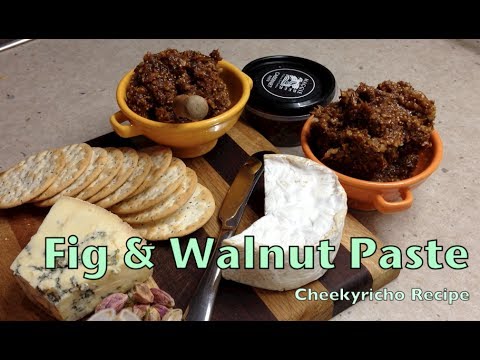
Once you have your brick of fig paste, the culinary world opens up. It is dense, sweet, and complex. We at Exotic Fruits and Vegetables believe in letting the ingredient shine by pairing it with contrasting flavors. The classic combination is, of course, cheese. A slice of fig paste on a cracker with a sharp blue cheese or an aged Manchego creates a perfect balance of salt, funk, and sugar.
For a quick appetizer, wrap a small cube of fig paste and a walnut half in a strip of prosciutto. The saltiness of the cured meat cuts right through the density of the fruit.
Storage is straightforward. Because of the high sugar content and low water activity, fig paste is relatively stable. Wrap it tightly in parchment paper and then plastic wrap. It will keep in the refrigerator for up to 6 months.
- Baking: Chop the paste into cubes and add them to muffins or scones; they won’t bleed into the batter like fresh fruit.
- Sauces: Dissolve a tablespoon of paste into pan drippings for pork or duck to create a rich, glossy glaze.
- Energy: It makes a fantastic natural energy chew for hiking. It’s basically nature’s PowerBar.
Growing Figs for Paste
If you want to control the quality of your paste, you need to control the growing conditions. Growing figs specifically for drying or paste requires a different approach than growing them for fresh market sales. You want to stress the tree slightly to concentrate sugars.
In our San Diego climate, this means dialing back irrigation significantly in August. I reduce water to about 5 gallons per tree every two weeks once the fruit begins to change color. This forces the tree to stop vegetative growth and pump carbohydrates into the fruit.
Soil fertility matters less than drainage. Figs thrive in soil that allows roots to breathe. I use a mix of native sandy loam amended with 20% compost to ensure drainage while retaining just enough moisture.
Pruning is also critical. I use an open-center pruning style, which looks like a wine goblet. This allows sunlight to hit every single fruit. Shade is the enemy of sugar. If a fig ripens in the shade of a large leaf, it will be larger but bland. If it ripens in full sun, it will be smaller, uglier, but packed with the complex flavors needed for a superior paste.

Varieties Recommendation
Here at Exotic Fruits and Vegetables, we always recommend starting with a variety that suits your microclimate. In coastal zones, “Desert King” is excellent because it ripens the breba crop (first crop) reliably even in cooler summers. Inland, where heat is abundant, “Black Madeira” produces the most complex, berry-like flavor, though it can be finicky to grow.
Avoid using nitrogen-heavy fertilizers (like lawn food) near your fig trees. This pushes lush green growth at the expense of fruit quality, leading to figs that taste like green beans rather than berry jam.
Why Bother Making It Yourself?
You might ask, is it really worth standing over a hot stove for four hours when I can buy a jar for eight dollars? The answer is an absolute yes. Store-bought paste is often diluted with apple juice concentrate, thickened with excessive commercial pectin, and preserved with sulfur dioxide. When you make it yourself, you taste the terroir of your own backyard.
There is also the satisfaction of waste reduction. My first year farming, I composted hundreds of pounds of “seconds”—fruit that was too ugly for the market stand but tasted perfect. Now, those ugly fruits become my highest-value product. Turning a perishable glut into a shelf-stable delicacy is the oldest and most rewarding trick in farming.
What could be more satisfying than slicing into a block of deep purple paste in the middle of January and tasting the heat of July?
Making fig paste is like bottling a sunset. It captures the fleeting nature of the season and makes it permanent. Our team at Exotic Fruits and Vegetables loves sharing this process because it empowers you to take control of your food supply. You don’t need a degree in agriculture; you just need a pot, some patience, and a love for good food.
So, next time your tree is dropping fruit faster than you can eat it, don’t let the wasps get the best of you. Grab a bucket, fire up the stove, and make something that will last.
Pro Tip: Adding a splash of balsamic vinegar during the final 10 minutes of cooking adds a depth of flavor that makes the paste irresistible with roast meats.