Soursop and cherimoya are both tropical fruits with a creamy texture and sweet, slightly tart flavor. While they share some similarities, they are distinct fruits with different origins, appearances, and flavors.
Taste and Texture Differences
While soursop and cherimoya share a common ancestor and belong to the same family, Annonaceae, they are distinct fruits with unique characteristics. One of the most noticeable differences lies in their taste and texture. Soursop, also known as guanabana, boasts a tangy, slightly acidic flavor that can be described as a blend of pineapple, strawberry, and citrus. Its flesh is creamy and fibrous, with a consistency similar to custard. The seeds, which are large and black, are inedible and should be removed before consumption.
In contrast, cherimoya, often referred to as “custard apple,” offers a sweeter and more delicate flavor profile. Its taste is reminiscent of a combination of banana, pineapple, and vanilla, with a hint of citrus. The texture of cherimoya is also distinct, being softer and smoother than soursop. Its flesh is creamy and custard-like, with a melt-in-your-mouth quality. Unlike soursop, cherimoya seeds are smaller and can be eaten, although they are not particularly flavorful.
The differences in taste and texture stem from the distinct chemical compositions of the two fruits. Soursop contains higher levels of citric acid, which contributes to its tangy flavor. Cherimoya, on the other hand, has a higher sugar content, resulting in its sweeter taste. The difference in texture can be attributed to the varying amounts of fiber and pectin present in each fruit. Soursop has a higher fiber content, leading to its more fibrous texture, while cherimoya’s lower fiber content contributes to its smooth and creamy consistency.
These differences in taste and texture make soursop and cherimoya suitable for different culinary applications. Soursop’s tangy flavor makes it an excellent ingredient for juices, smoothies, and sorbets. Its creamy texture also lends itself well to desserts like ice cream and puddings. Cherimoya’s sweet and delicate flavor makes it a popular choice for fresh eating, as well as for use in desserts like pies, cakes, and custards. Its smooth texture also makes it a good addition to smoothies and milkshakes.

Nutritional Value Comparison
Cherimoya, on the other hand, stands out for its higher fiber content. Dietary fiber is essential for digestive health, promoting regular bowel movements and preventing constipation. It also helps regulate blood sugar levels, contributing to overall metabolic health. Furthermore, cherimoya is rich in vitamin B6, a vital nutrient involved in energy metabolism, brain function, and the production of neurotransmitters.
In terms of mineral content, both fruits offer a range of essential minerals, but their specific profiles differ. Soursop is a good source of magnesium, a mineral that supports muscle and nerve function, while cherimoya is rich in iron, a mineral crucial for oxygen transport in the blood.
Beyond their individual nutritional strengths, both soursop and cherimoya offer a range of potential health benefits. Soursop has been traditionally used for its anti-inflammatory and antioxidant properties, while cherimoya is known for its potential to improve heart health and blood sugar control.
However, it’s important to note that the scientific evidence supporting these claims is still limited, and further research is needed to fully understand the health benefits of these fruits.
Origin and History
Soursop, scientifically known as *Annona muricata*, is native to the Caribbean and Central America. Its history is deeply intertwined with the indigenous cultures of these regions. Archaeological evidence suggests that soursop was cultivated in the Caribbean as early as 1000 AD. The fruit played a significant role in the traditional medicine and cuisine of the indigenous peoples. For example, the Taíno people of the Caribbean used soursop to treat a variety of ailments, including fever, diarrhea, and skin infections.

Cherimoya, on the other hand, has a different origin story. Its scientific name, *Annona cherimola*, reflects its native habitat: the Andean highlands of South America. The fruit is believed to have been cultivated in the region for centuries, with evidence suggesting its presence in Peru as early as 1500 BC. The Incas, who ruled the Andean region, highly valued cherimoya and incorporated it into their diet and traditional medicine.
Unlike soursop, cherimoya’s journey to other parts of the world began relatively late. It was introduced to Europe by Spanish explorers in the 16th century. However, it took several centuries for cherimoya to gain popularity outside its native region. The fruit’s delicate nature and susceptibility to cold temperatures made it difficult to transport and cultivate in other climates.
Despite these challenges, cherimoya eventually found its way to other parts of the world, including California, Australia, and Israel. Today, it is cultivated in various tropical and subtropical regions, but its production remains concentrated in its native Andean region.
Culinary Uses
Soursop, with its tangy and slightly acidic flavor, is often used in beverages and desserts. Its creamy texture, reminiscent of custard, makes it an ideal ingredient for smoothies, juices, and ice cream. The fruit’s tartness balances the sweetness of other ingredients, creating a refreshing and flavorful combination. In some regions, soursop is also used to make jams, jellies, and even candies. Its distinctive flavor adds a unique twist to traditional desserts, offering a refreshing alternative to more common fruit options.
Cherimoya, on the other hand, boasts a sweeter and more delicate flavor profile. Its creamy texture and subtle sweetness make it a popular choice for fresh consumption. The fruit can be enjoyed on its own, or incorporated into various desserts, such as pies, cakes, and puddings. Its mild sweetness complements a wide range of flavors, making it a versatile ingredient in both sweet and savory dishes. In some cultures, cherimoya is also used to make ice cream, sorbets, and even sauces. Its delicate flavor and creamy texture lend themselves well to these applications, adding a touch of tropical sweetness to culinary creations.
Beyond their individual uses, soursop and cherimoya can also be combined to create unique and flavorful dishes. Their complementary flavors and textures create a harmonious blend that appeals to a wide range of palates. For instance, a soursop and cherimoya smoothie offers a refreshing and balanced combination of tartness and sweetness. The soursop’s tanginess balances the cherimoya’s sweetness, creating a delightful and invigorating beverage. Similarly, a soursop and cherimoya sorbet combines the creamy texture of both fruits with a refreshing and tangy flavor profile.
Health Benefits and Potential Risks
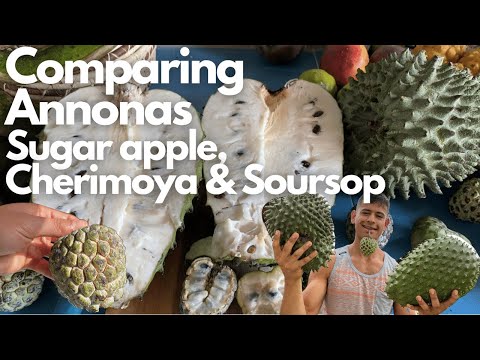
Soursop, also known as guanabana, is a large, heart-shaped fruit with a spiky, green exterior. Its flesh is white and creamy, with a tangy, slightly acidic flavor. Cherimoya, on the other hand, is smaller and rounder, with a smooth, green skin. Its flesh is white and segmented, resembling custard, and has a sweet, slightly tart flavor.
- Both fruits are rich in nutrients, offering a range of health benefits. Soursop is a good source of vitamin C, potassium, and fiber, while cherimoya is rich in vitamin B6, potassium, and magnesium. Both fruits are also low in calories and fat, making them a healthy addition to a balanced diet.
- One of the most notable health benefits associated with soursop is its potential anticancer properties. Studies have shown that soursop contains compounds that may inhibit the growth of cancer cells, particularly those associated with leukemia, breast cancer, and colon cancer. However, it is important to note that these studies are still in their early stages, and more research is needed to confirm these findings.
- Cherimoya, while not as extensively studied as soursop, is also believed to offer health benefits. Its high potassium content may help regulate blood pressure and support heart health. Additionally, cherimoya’s fiber content can aid in digestion and promote regularity.
- Despite their potential health benefits, both soursop and cherimoya come with some potential risks. Soursop contains a compound called acetogenins, which have been linked to neurotoxicity in high doses. While consuming soursop in moderation is generally considered safe, excessive consumption may lead to neurological problems.
- Cherimoya, on the other hand, contains a compound called annonacin, which has been associated with a rare neurological disorder called atypical parkinsonism. However, the risk of developing this disorder from consuming cherimoya is considered low, as it would require consuming large quantities of the fruit over a prolonged period.
- It is important to note that these potential risks are based on limited research, and more studies are needed to fully understand the safety of these fruits. Individuals with pre-existing health conditions or who are taking medications should consult with their healthcare provider before consuming soursop or cherimoya.
In conclusion, soursop and cherimoya are distinct fruits with unique characteristics and potential health benefits. While both fruits offer a range of nutrients, they also come with potential risks that should be considered. As with any food, moderation is key, and it is always advisable to consult with a healthcare professional before making significant dietary changes.
Q&A
**1. Question:** Are soursop and cherimoya the same fruit?
**Answer:** No, they are different fruits.
**2. Question:** What are the main differences between soursop and cherimoya?
**Answer:** Soursop has a spiky, green exterior and a creamy, white flesh with a tangy, slightly acidic flavor. Cherimoya has a smooth, brown exterior and a creamy, white flesh with a sweet, custard-like flavor.
**3. Question:** Are soursop and cherimoya related?
**Answer:** Yes, they are both members of the Annonaceae family.
**4. Question:** Where are soursop and cherimoya grown?
**Answer:** Soursop is native to the Caribbean and South America, while cherimoya is native to the Andes Mountains of South America.
**5. Question:** What are the health benefits of soursop and cherimoya?
**Answer:** Both fruits are rich in antioxidants, vitamins, and minerals. They are also a good source of fiber.