
Cherimoya belongs to the genus Annona, yet it stands apart from its closest relatives in climate preference and fruit character. Annona cherimola is the highland subtropical member of a mostly tropical group that also includes sweetsop (Annona squamosa), soursop (Annona muricata), custard apple or bullock’s heart (Annona reticulata), and the hybrid atemoya (A. cherimola × A. squamosa). On our Exotic Fruits and Vegetables plots the distinction shows clearly: cherimoya thrives in the cool coastal air while the lowland tropical species struggle or fail.
I once set a few sweetsop and soursop seedlings beside established cherimoya rows. The cherimoyas leafed out on schedule; the others stalled through the mild winter and never produced usable fruit. That contrast settled the practical ranking for San Diego.
Cherimoya is the most cold-tolerant commercial Annona and the only one that routinely succeeds in California’s Mediterranean coastal zone.
Have you ever bought a fruit labeled simply “custard apple” and found it tasted nothing like the cherimoya you grew at home? The common name confusion is widespread across the genus.
Climate and hardiness differences
Cherimoya needs 50 to 100 chill hours and tolerates brief dips to 25 F on mature trees. It prefers daytime temperatures of 60 to 85 F and cool nights. Sweetsop and soursop demand steady tropical heat, high humidity during flowering, and almost no frost; they defoliate or die below about 30 F. Custard apple (A. reticulata) sits between them but still favors warmer lowland conditions. Atemoya inherits intermediate traits and performs better than pure sweetsop in some subtropical sites, yet it remains less reliable than cherimoya on the California coast.
Elevation patterns follow the same split. Cherimoya thrives at 1,200 to 2,500 meters in the tropics or in low-elevation Mediterranean climates. The other species prefer elevations below 1,000 meters with higher average temperatures.
| Species | Climate preference | Frost tolerance | California fit |
|---|---|---|---|
| Cherimoya | Subtropical / mild Mediterranean | Brief 25 F mature | Excellent coastal |
| Sweetsop | Tropical lowland | Very low | Poor |
| Soursop | Tropical humid | Very low | Poor |
| Custard apple | Warm subtropical | Low | Limited |
| Atemoya | Intermediate | Low to moderate | Variable |
Planting tropical Annona species in a cool coastal site guarantees weak growth and little or no fruit.
What happens when humidity stays high and nights remain warm? Soursop and sweetsop set fruit more readily, while cherimoya risks disease and reduced quality.
- Choose cherimoya for coastal southern California.
- Reserve sweetsop and soursop for true tropical or greenhouse conditions.
- Test atemoya only in the warmest microclimates.
- Confirm chill hours and frost history before planting any species.
Fruit form, flavor and texture
Cherimoya fruit is heart-shaped or conical with skin that ranges from smooth to lightly scaled or mammillated. The white flesh is smooth, melting and fragrant, combining banana, pineapple and strawberry notes with mild acidity. Seeds are hard and black but relatively few in good cultivars.
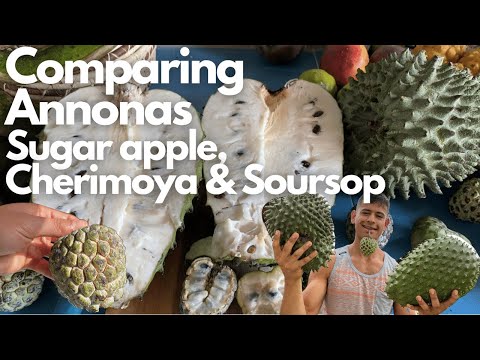
Sweetsop fruit is smaller, knobby and segmented; the flesh is creamy yet grainier and separates into individual segments around each seed. Flavor runs very sweet with less complexity. Soursop produces the largest fruit, often 2 to 5 pounds or more, covered in soft spines; the fibrous white pulp is sweet-tart with pineapple-citrus notes. Custard apple (A. reticulata) yields medium heart-shaped fruit with smoother skin that may blush red or brown; the flesh is sweet but often milder and sometimes granular.
- Cherimoya: smooth to lightly textured, complex tropical blend
- Sweetsop: knobby segments, pure sweet custard
- Soursop: spiny, large, sweet-tart and fibrous
- Custard apple: milder, variable skin color
A ripe cherimoya scooped with a spoon remains the cleanest and most aromatic eating experience among the commercial Annona fruits.
The calculator below estimates flesh yield for cherimoya so a grower can compare usable pulp against the higher seed ratios common in sweetsop.
Loading calculator...
Practical choices for a San Diego orchard
For reliable outdoor production the choice stays clear. Cherimoya matches the local climate, accepts the light chill, and produces marketable fruit with hand pollination. The other Annona species serve as curiosities or greenhouse experiments. Atemoya can be worth a trial in the warmest protected spots, yet it still lags behind pure cherimoya in consistency.
Have you tasted fruit from the same genus side by side and noticed how the highland origin of cherimoya delivers a cleaner finish than the lowland tropical types?
Pollination habits are similar across the genus: dichogamous flowers that often need hand transfer for good set. Post-harvest life is short for all of them once soft. Nutrition profiles overlap, with modest calories, useful vitamin C and potassium, yet the real difference remains climate adaptation rather than laboratory numbers.
The second calculator assesses climate suitability for cherimoya under local temperature and chill inputs, confirming why it succeeds where most other Annona species do not.
Loading calculator...
Field conclusion
After years of observing the genus side by side the ranking holds. Cherimoya is the Annona that belongs on the San Diego coast. The tropical relatives remain better suited to warmer, more humid regions. Keep the botanical names clear and match the species to the climate, and the harvest stays productive and distinctive.






I am constantly hunting for cherimoya in the bay area and the prices are getting ridiculous. Last week I saw them at a specialty market in San Jose for 14.99 a pound. When one fruit weighs over a pound, you are paying twenty dollars for a single cherimoya. Sometimes H Mart gets the smaller ones, but they are often mislabeled as custard apples or sweetsops, which is incredibly annoying because they do not taste the same at all. When I am buying them, I look for fruits that are turning slightly pale green or yellow-green. If they are dark green and rock hard, they were picked too early and will just rot on the counter instead of ripening properly. I also do the gentle squeeze test near the stem end. It should give slightly, like a ripe avocado. Does anyone know if there is a cheaper online source that ships actual California-grown cherimoyas rather than importing them? Spending seventy dollars for a box of four fruits on Etsy is just not sustainable.
The retail pricing for cherimoyas in Northern California is indeed high, mostly because they are delicate to ship and the California commercial harvest is relatively small, centered mainly in Santa Barbara and San Diego counties. Regarding your question about sourcing, buying directly from growers in southern California during the peak season from January to May is usually your best option to avoid retail markups. Growers like Rincon Cove Organics or Calimoya occasionally sell direct or through regional farm co-ops.
Your method of selecting fruits by looking for the pale green shift and testing the stem end is correct. Cherimoyas are climacteric and will ripen at room temperature, but if they are picked before they reach physiological maturity, they lack the brix development and will simply shrivel. A mature cherimoya will have flatter skin scales and a slight color break. If you buy them firm, keep them at 55 to 60 degrees Fahrenheit until soft. Do not refrigerate them while hard, as cold temperatures below 45 degrees will cause chilling injury, leading to brown skin discoloration and preventing the flesh from softening properly.
That tip about chilling injury explains so much. I put a couple of firm ones in the fridge last winter because I was worried they would go soft too fast, and they turned completely black and never ripened. I will look into Rincon Cove Organics for my next order.