

I grow cherimoya and have tasted sitafal side by side for years, so the differences are practical rather than theoretical. Annona cherimola, the cherimoya or custard apple, and Annona squamosa, known as sitafal, sugar apple, or sweetsop, share the same family yet differ in skin, texture, climate needs, and flavor balance. On our Exotic Fruits and Vegetables plots, the second-year cherimoya trees set fruit about three weeks later than the nursery stock we bought in, while sitafal selections demand warmer conditions and rarely match the same consistency here.
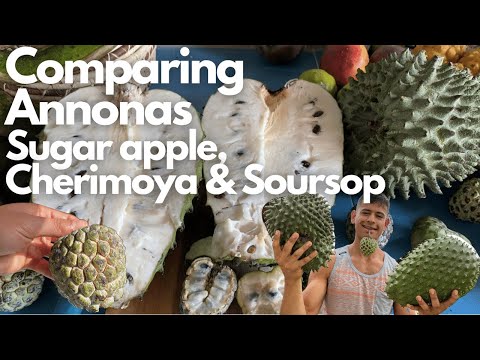
Cherimoya fruit is heart-shaped or conical with relatively smooth skin marked by fingerprint-like depressions or soft scales. The white flesh is continuous, smooth, and custard-like, with fewer seeds that separate cleanly. Flavor is complex and balanced, usually described as banana, pineapple, and a light strawberry or vanilla note. Sitafal fruit is rounder or conical with thick, knobby, clearly segmented skin that breaks apart when ripe. The flesh is sweeter, more granular, and arranged in segments around a higher number of seeds.
Cherimoya tolerates brief light frost when mature and needs fifty to one hundred chill hours. Sitafal is a true lowland tropical that suffers damage near freezing and performs best in consistently warm, humid sites.
In coastal San Diego the distinction is immediate. Cherimoya trees leaf out and flower after our mild winters. Sitafal trees struggle with cool nights and produce erratic crops unless given extra protection.
Growing conditions that decide which plant succeeds
Cherimoya is spaced twenty to twenty-five feet apart on well-drained soil with pH 6.5 to 7.5. Mature trees handle short dips to about twenty-six degrees Fahrenheit. Hand pollination is standard for uniform fruit set. Sitafal prefers warmer nights, higher humidity tolerance in many regions, and has even less frost tolerance. Trees can be smaller, yet the fruit is more segmented and seedier.
For cherimoya, deep watering every two weeks during active growth and balanced 8-8-8 fertilizer every three months support steady production. Late nitrogen pushes soft growth that is more vulnerable to cold.
One concrete failure still guides planting decisions. I trialled four sitafal seedlings on a protected but still cool slope in 2020. A single night near twenty-nine degrees killed the tops and delayed any useful crop by two seasons. Replacement trees and lost time cost several hundred dollars before I shifted remaining plants to a warmer micro-site that still proved marginal.
Planting sitafal in a cherimoya-suited coastal site without reliable frost protection is the most common reason the trees fail to reach productive size in Southern California.
Loading calculator...
Yield patterns differ. A mature cherimoya under hand pollination can carry one hundred or more fruits, each typically weighing half a pound to two pounds. Sitafal often produces more fruits per tree in ideal tropical conditions, yet individual fruits are smaller and the edible yield after seeds is lower because of the segmented structure.
Fruit quality, preparation, and market reality
Retail cherimoya currently sells between nine and sixteen dollars per pound for good fruit. Sitafal, when available, often commands a lower per-pound price in tropical markets but appears less frequently as fresh fruit in California specialty stores. Preparation of cherimoya is straightforward: cut in half, remove the black seeds, and scoop the smooth flesh. Sitafal requires separating the knobby segments and extracting seeds from each one, which takes more time and leaves a grainier texture.
| Trait | Cherimoya (Annona cherimola) | Sitafal / Sugar Apple (Annona squamosa) |
|---|---|---|
| Skin | Smooth to lightly scaled | Thick, knobby, segmented |
| Flesh texture | Smooth, continuous, custard-like | Granular, segmented |
| Seed load | Fewer, easier to remove | Higher, one per segment |
| Flavor | Balanced tropical, less purely sweet | Intensely sweet, milder complexity |
| Climate | Coastal subtropical, some chill | Warm tropical lowland |
Have you ever expected the smooth spoonable texture of cherimoya and instead found a grainier, segmented pulp that required more work to seed? That mismatch is the most frequent surprise when the two fruits are confused at market.
Sensory detail separates them cleanly. Ripe cherimoya flesh feels cool and dense under the spoon and carries a mild pineapple-banana aroma. Sitafal flesh is softer, more granular between the fingers, and smells sweeter and less complex.
- Choose cherimoya for smooth texture and coastal California production.
- Choose sitafal for intense sweetness in true tropical sites.
- Match the plant to actual winter lows rather than daytime averages.
- Budget extra time for seeding sitafal if you plan to process volume.
- Cherimoya for dessert quality and easier preparation
- Sitafal for maximum sweetness and segmented eating
- Never assume the two are interchangeable in the orchard
- Always discard all seeds from both species
In our climate sitafal requires more protection and still yields less consistent marketable fruit than the cherimoya blocks. The extra effort rarely pays at local prices.
Seeds of both fruits contain alkaloids that can cause severe symptoms if crushed or swallowed. Discard every seed and the skin of both species.
I once packed a mixed sample for a chef who had requested only cherimoya. The presence of one knobby sitafal fruit led to a long discussion about labeling. Clear naming on every box eliminated the confusion and protected the higher price the cherimoya commands.
Loading calculator...
Which fruit fits your site and kitchen
For San Diego and similar coastal conditions, cherimoya is the practical choice. It matches the chill hours, tolerates occasional light frost, and produces fruit that sells readily at eight to sixteen dollars per pound with smoother texture and easier preparation. Sitafal remains a tropical specialist that rewards growers only where winter temperatures stay reliably warm. Taste is personal, yet the growing realities and handling differences favor cherimoya for most people in this climate. Select the species that fits your winter lows first, then refine varieties within that species.







I track these down every winter in Southern California, and the price markup at retail is getting ridiculous. Last weekend I found cherimoyas at a specialty market in San Diego for fifteen dollars a pound. A single decent-sized fruit ended up costing me almost twenty-four dollars. You can sometimes find them slightly cheaper at local Asian markets like 99 Ranch or H Mart, or sometimes in small Hispanic markets labeled as chirimoya, but they sell out fast. When buying, ignore the completely green, rock-hard ones unless you want to wait a week. Look for ones that have a slight pale yellow tint between the skin depressions. Give it a very gentle squeeze. It should yield slightly, like a ripe avocado, but not feel mushy or have dark brown bruises. If you find sitafal, which is incredibly rare fresh around here, it is usually imported and priced even higher. Most people end up buying frozen sitafal pulp instead because the fresh ones damage so easily during transit.
Regarding the pricing and availability in Southern California, those high retail prices reflect the shipping and handling challenges of climacteric fruits. Cherimoyas are highly sensitive to bruising once they begin to soften, which limits their distribution to high-end specialty grocers or direct farm sales. The price difference between the fresh fruit and frozen sitafal pulp is mostly due to the labor required to process the seeded segments of Annona squamosa. Frozen pulp is often processed in countries like India or Vietnam where production costs are lower. When selecting cherimoya, look also for skin that is starting to show very light brown flecking. This indicates the starches are actively converting to sugars, yielding that classic banana and vanilla flavor profile.
Thanks for explaining that. I actually bought one of those slightly flecked ones yesterday based on your tip, and the flavor was much sweeter than the pristine green ones I usually pick.
If you buy them hard, put them in a brown paper bag with a banana or apple on your kitchen counter. The concentrated ethylene gas speeds up the softening process. Never put a hard cherimoya or sitafal in the refrigerator. The cold temperature stops the ripening process permanently, leaving you with a rubbery, tasteless fruit.