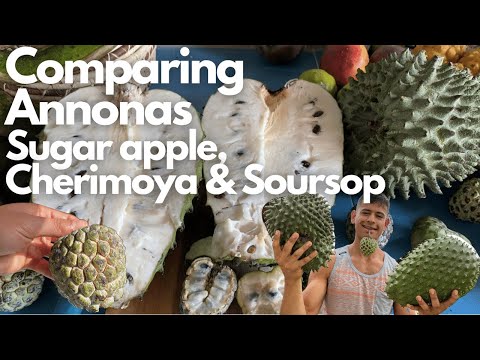
Side by side in the packing shed the two fruits look related yet behave like distant cousins once you bite in. Sweetsop, also called sugar apple or Annona squamosa, breaks into soft knobby segments that separate cleanly around each black seed. Cherimoya, Annona cherimola or custard apple in older texts, holds together as a single creamy mass with a thinner skin that may show fingerprint depressions or mild scales.
On our Exotic Fruits and Vegetables plots the cherimoya trees hold their leaves longer into winter while any sweetsop seedlings I tried yellowed and stalled once nights dropped below 50 F. That single observation settled the question of which species belongs in coastal San Diego.
Cherimoya originated in the Andean highlands of Ecuador and Peru; sweetsop is a tropical lowland species from the Americas and West Indies that later spread across Asia.
Have you ever planted a sweetsop expecting the same winter dormancy as cherimoya and watched the tips burn in a light frost? That exact mismatch ends most sweetsop trials here before the second season.
Tree size, climate needs and field performance
Cherimoya reaches 20 to 30 feet if left unpruned and needs 50 to 100 chill hours between 32 and 45 F to flower properly. Mature trees tolerate brief dips to 25 F. Sweetsop stays smaller, usually 10 to 20 feet, and thrives in steady heat of 73 to 94 F with high humidity during bloom. It defoliates below 50 F and dies at a couple of degrees of frost.
Spacing follows the same logic. Cherimoya goes in at 20 to 25 foot centers in California orchards. Sweetsop can sit closer, 15 to 20 feet, because its canopy stays compact. Both demand well-drained sandy loam or decomposed granite at pH 5 to 8, yet sweetsop shows less tolerance for the cool wet winters that define our coastal valleys.
| Trait | Cherimoya | Sweetsop |
|---|---|---|
| Mature height | 20–30 ft | 10–20 ft |
| Chill requirement | 50–100 hours | None; frost sensitive |
| Ideal daytime range | 60–85 F | 73–94 F |
| Fruit weight range | 5–18 oz, up to 5 lb | 3–8 oz |
Planting sweetsop in a spot that collects cold air overnight guarantees tip dieback before the tree can set a commercial crop.
I once set three sweetsop seedlings beside a row of Booth cherimoya. The cherimoyas leafed out on schedule in April; the sweetsops sat half-dormant until June and never produced a single flower that season. The cost was two years of irrigation and the space they occupied.
Yield figures reflect the climate fit. A mature hand-pollinated cherimoya in California can deliver 25 to 80 fruits. Sweetsop under ideal tropical conditions yields 20 to 60 fruits per tree, but those numbers collapse when nights stay cool. The calculator below estimates planting density for cherimoya under local spacing rules; sweetsop would need tighter centers if it could survive here.
Loading calculator...
Fruit structure, flavor and eating experience
Cherimoya fruit is conical or heart-shaped with skin that ranges from smooth to lightly scaled. The white flesh stays uniform and custard-smooth, carrying a mix of banana, pineapple and strawberry notes with a mild acid finish. Seeds are hard and black but fewer per fruit than in sweetsop.
Sweetsop fruit is smaller, more rounded or conical, and covered in thick knobby segments that separate when ripe. The flesh is also creamy white yet grainier; each segment holds its own seed, so you pull the fruit apart rather than scoop it. Flavor runs sweeter and more one-dimensional, sometimes with a faint mint or cinnamon edge.
A fully ripe cherimoya yields to gentle thumb pressure and smells faintly of tropical flowers; the flesh slides off the spoon without graininess.
What happens when you leave a sweetsop on the counter one day too long? The segments collapse into a watery mess while a cherimoya of the same age still holds its shape for another 24 hours.
Both fruits store poorly once soft. Cherimoya prefers temperatures above 55 F until fully ripe, then a short cold hold. Sweetsop follows the same rule yet softens faster in our dry air.
- Pick both species when still firm and the skin has lightened slightly.
- Allow room-temperature ripening until the flesh yields to pressure.
- Scoop cherimoya flesh with a spoon; separate sweetsop segments by hand.
- Discard all seeds of both; they contain toxic compounds.
Never chew or swallow the seeds of either fruit; the compounds they contain can cause digestive distress and, in quantity, more serious neurological effects.
Sensory differences show up the moment the skin is opened. Cherimoya flesh feels silky and cool; sweetsop feels slightly fibrous between the segments. The aroma of cherimoya fills a room within minutes; sweetsop stays quieter.
Practical choices for a San Diego grower
For coastal or foothill sites with marine influence, cherimoya is the reliable choice. It matches the mild winters, accepts the light chill, and produces marketable fruit with hand pollination. Sweetsop belongs in true tropical lowlands or in heated greenhouses; outdoor plantings here remain experimental at best.
- Choose cherimoya for cooler nights and longer storage window
- Choose sweetsop only where frost never occurs and humidity stays high
- Graft either species onto strong seedling rootstocks for faster bearing
- Expect hand pollination for both if natural pollinators are scarce
Have you tried tasting the two fruits side by side on the same afternoon and noticed how the acidity in cherimoya cleans the palate after the pure sugar of sweetsop?
Nutrition numbers run close. Both supply roughly 90 to 100 calories per 100 g of pulp, useful vitamin C, and modest potassium. Cherimoya edges ahead in overall food value according to older analyses, yet the real difference for a grower remains climate fit rather than lab numbers.
The calculator below estimates flesh yield and calorie content from a given fruit weight for cherimoya; the same ratios roughly apply to sweetsop once you account for its higher seed proportion.
Loading calculator...
Final field notes
After fifteen seasons the pattern stays consistent. Cherimoya fills the winter market and holds its place in the orchard. Sweetsop remains a curiosity that teaches more about climate limits than about commercial potential. Keep the two species distinct in both the field and the kitchen and the results stay predictable.