

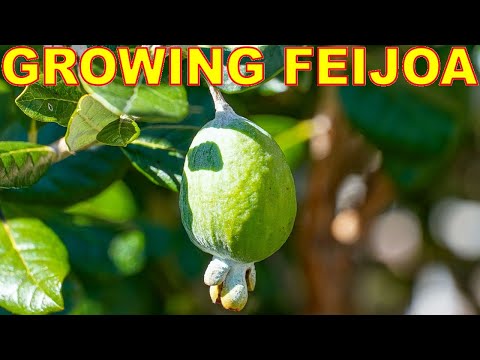
There is a specific moment in late October, right when the Santa Ana winds start to die down here in San Diego, that my orchard smells like a perfume factory exploded. It isn’t citrus, and it certainly isn’t jasmine. It is the intoxicating, floral aroma of Acca sellowiana, better known to most locals as the Pineapple Guava, or simply Feijoa.
If you have ever walked past a hedge in Point Loma or La Mesa and caught a whiff of tropical cotton candy mixed with fresh mint, you know exactly what I am talking about. It is a scent that signals the coming of winter, but unlike the rest of the country, our winter brings an abundance of green, egg-shaped gold.

I learned this the hard way nearly fifteen years ago when I planted a row of generic, unnamed seedlings from a big-box store. Five years later, I had beautiful, drought-tolerant bushes, but the fruit was the size of marbles and tasted like turpentine. It was a heartbreaking waste of water and time.
Ever wonder why some feijoas taste like a tropical dream while others possess a bitter, soapy aftertaste that ruins your palate?
The secret lies entirely in the variety you choose. Genetics are everything. Through my work with Exotic Fruits and Vegetables farm, I have trialed over a dozen cultivars to see which ones actually perform in Southern California soil. We aren’t just looking for survival; any feijoa can survive here. We are looking for that perfect balance of sugar, acid, and a grit-free texture that melts in your mouth.
Understanding the “Self-Fertile” Myth
Before we dive into specific names, we need to clear the air about pollination. Many nurseries label feijoas as “self-fertile.” While technically true for varieties like Coolidge, relying on that label is a novice mistake. A feijoa bush planted alone is like a person talking to themselves—you get a result, but the conversation isn’t very rich. The biology of the plant prefers cross-pollination, and it rewards you for it.
Planting at least two different varieties close together (within 10-15 feet) increases fruit yield by roughly 300% and significantly improves the size of the individual fruits.
I once ran an experiment in the back acre where I isolated a ‘Coolidge’ (supposedly self-fertile) and hand-pollinated another ‘Coolidge’ with pollen from a ‘Nazemetz’. The cross-pollinated fruit weighed an average of 3.5 ounces, while the self-pollinated ones struggled to hit 1.5 ounces. Cross-pollination is the non-negotiable key to getting those baseball-sized fruits you see at the farmers market. If you want fruit that is worth peeling, get your plant a partner.
Top Performers for the American Southwest
If you are dedicating irrigation lines and precious soil space to these plants, you want the heavy hitters. Here is the breakdown of the varieties that have earned their keep on my land.
1. Nazemetz: The Flavor King
If I could only grow one feijoa for the rest of my life, it would be the Nazemetz. Originating right here in California, it is tailored for our climate. The fruit is distinct—pear-shaped rather than round—and the pulp is translucent and gelatinous. Unlike older varieties that can be gritty (like eating a pear with sand in it), Nazemetz is smooth.
The flavor profile is less “piney” and sweeter, leaning heavily into strawberry and melon notes. It ripens late in San Diego, usually late November through December, which spreads out your harvest if you have other earlier varieties. It is the variety I give to skeptics who think they don’t like feijoas.
Nazemetz consistently scores highest in our blind taste tests for its lack of stone cells (grit) and non-bitter skin, meaning you can eat it whole without peeling.
2. Coolidge: The Reliable Workhorse
Named after the rare fruit pioneer who popularized it in California, Coolidge is the standard by which others are judged. It isn’t the most exciting fruit in terms of complex flavor notes, but it is bulletproof. It produces consistently, year after year, regardless of whether we have a heatwave or a wet winter.
I use Coolidge primarily as a pollinator for my other varieties, but the fruit itself is decent—mild, pleasant, and usually medium-sized. If you absolutely only have space for one bush in a tight urban patio, this is your safest bet because it is the most self-fertile of the bunch. It won’t win a flavor contest against Nazemetz, but it will ensure you actually get fruit.
3. Mammoth: The Heavyweight
As the name implies, these fruits are huge. I have harvested Mammoths that tip the scales at nearly 8 ounces. They are softer and arguably juicier than Coolidge. However, Mammoth has a reputation for being a bit fragile. The fruit can bruise easily if it drops, so I usually put mulch or straw thick under these bushes to cushion the fall.
Mammoth is strictly self-sterile. If you plant a Mammoth without a partner like Coolidge or Apollo nearby, you will get spectacular flowers but zero fruit.
4. Apollo: The Commercial Contender
Apollo is a New Zealand selection that grows vigorously here. The fruit is large, oval, and has a very thin skin. The flavor is incredibly aromatic. You can smell a ripe Apollo from ten feet away. It’s a great mid-season ripener. I’ve found the upright growth habit of Apollo makes it easier to prune into a tree form if you don’t want the bushy “hedge” look.
Variety Comparison Data
Here is a quick reference based on my harvest logs from the last three seasons in Zone 10b:
| Variety | Pollination Need | Average Fruit Weight | Harvest Window (San Diego) | Flavor Profile |
|---|---|---|---|---|
| Nazemetz | Partially Self-Fertile | 2.5 – 3.5 oz | Late Nov – Jan | Sweet, smooth, strawberry-like |
| Coolidge | Self-Fertile | 1.5 – 2.5 oz | Oct – Dec | Mild, reliable, standard |
| Mammoth | Needs Pollinator | 4.0 – 7.5 oz | Oct – Nov | Juicy, slightly gritty, tart |
| Apollo | Partially Self-Fertile | 3.0 – 5.0 oz | Nov – Dec | Aromatic, thin skin, tropical |
The Art of Cultivation: It’s Not Just “Plant and Pray”
Growing feijoas is easier than growing citrus, but they aren’t cacti. They need specific inputs to transition from a decorative shrub to a fruit factory. Many people fail because they treat the feijoa as strictly ornamental.
Watering: The Fruit-Fill Stage
This is where most growers fail. Feijoas are drought tolerant *shrubs*, but they are water-needy *fruit producers*. If you stop watering in September because the summer heat broke, your fruit will drop prematurely or end up hollow inside. It is a tragedy to cut open a large fruit only to find it dry and empty.
I treat the soil like a sponge that needs to stay damp but not soaking. During fruit swell (August through October), I give each mature bush about 10-15 gallons of water a week. I use drip irrigation to keep the moisture consistent. Think of water stress during fruit set like running a marathon without water stations; the plant just shuts down the expensive processes (fruit) to save the vital ones (leaves).
Feeding the Beast
Feijoas are not heavy feeders compared to avocados, but they appreciate a boost. I apply an organic 10-10-10 fertilizer in late February right before the spring flush. Here at Exotic Fruits and Vegetables, we’ve found that adding a layer of composted chicken manure in early summer helps boost the nitrogen just enough to keep the canopy lush without sacrificing fruit production. However, avoid heavy nitrogen late in the year, or you will encourage new leaf growth that will get zapped by the cold.
Did you know the flower petals are edible? They taste like marshmallows or cotton candy. But be careful—every petal you eat is a potential fruit you are destroying, although birds usually eat the petals and pollinate the flower in the process.
Pruning: Opening the Windows
Many homeowners let their feijoas turn into dense, impenetrable green balls. While this is great for privacy, it is terrible for fruit production. The interior of the bush needs light and air circulation to prevent scale and fungal issues. Pruning is like giving the plant a haircut; you want to clear out the messy, crossing branches in the center.
I prune my trees in early spring after the risk of frost has passed but before the heavy bloom set. I aim to “open the windows” of the tree, removing about 20% of the interior growth. This allows the bees to navigate easily to the flowers hidden inside. A well-pruned tree should allow dappled sunlight to hit the ground beneath it.
Harvesting: The Gravity Test
How do you know when they are ready? This is the most common question I get. Unlike an apple, a feijoa doesn’t change color dramatically when ripe. It stays green, which confuses the heck out of beginners.
“The best place to store a feijoa is on the tree, until gravity decides it’s time to let go.”
However, waiting for them to hit the ground can lead to bruising or rot if you have damp mulch. I prefer “touch picking,” a method that requires a gentle hand and patience.
- Wait for the drop: Once you see the first few fruits on the ground, the season has officially started.
- The Tilt Test: Gently cup a fruit on the branch and tilt it upward.
- Resistance check: If it snaps off easily with zero pulling, it is ready. If you have to yank, twist, or pull, walk away. It is not ready.
- Curing: Bring them inside and let them sit on the counter for 2-3 days until they give slightly to a squeeze, like a ripe avocado.
Never pull a feijoa off the tree by force. If you pick it early, it will not ripen properly off the branch; it becomes rubbery, bland, and distinctly unappealing.
Culinary Uses: Beyond the Spoon
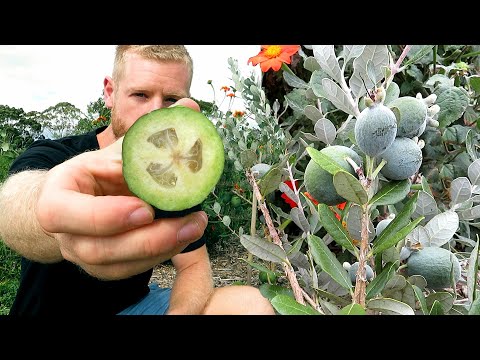
Most people just cut them in half and scoop out the jelly center. That is the classic way, and it works. But with varieties like Nazemetz, the skin is not bitter. You can eat the whole thing, though the texture of the skin is a bit leathery and tart, providing a nice contrast to the sweet center.
My favorite way to process a bumper crop is making a feijoa chutney with ginger and onions. The tartness of the fruit cuts through fatty meats like pork or duck beautifully. Our team at Exotic Fruits and Vegetables loves blending the peeled pulp into smoothies—it adds a creamy texture similar to banana but with a tropical kick that wakes you up. We also dehydrate slices for a chewy, sweet-tart snack that lasts for months.
Why This Matters
Why do we go through the trouble of importing pollen, fighting off squirrels, and managing irrigation for a green fruit that looks like a lime but isn’t?
Because the flavor is unreplicable. You cannot buy a high-quality feijoa at a standard grocery store. They don’t ship well; their shelf life is too short, and they bruise if you look at them wrong. Growing them yourself is the only access ticket to this flavor experience. It is a privilege of living in our zone.
The combination of a Nazemetz and an Apollo bush in a backyard garden is perhaps the highest return on investment you can get in a San Diego landscape. They offer privacy as a hedge, beautiful red-and-white flowers in spring, and buckets of fruit in winter when everything else in the garden is dormant.
Final Thoughts from the Field
I once almost bulldozed my entire feijoa patch because I thought they were bringing in too many fruit flies. Turns out, I was just leaving overripe fruit on the ground too long, creating a buffet for pests. Once I tightened up my harvest schedule and picked up the drops daily, the pests vanished. Farming is 10% knowing what to grow and 90% observation.
If you have a spot of dirt in Southern California, get these in the ground. Just remember: Don’t let them get lonely. Plant a pair, water them through the fall, and you’ll be eating tropical custard by Christmas.
- Nutritional Bonus: Feijoas are packed with Vitamin C and fiber, making them a healthy winter snack.
- Drought Tolerance: Once established, they survive on very little water (though they won’t fruit well without it).
- Pest Resistance: They have very few natural predators in the US compared to stone fruit or citrus.
- Aesthetic Value: The silver-backed leaves are stunning in floral arrangements and contrast beautifully with dark green foliage.
Remember to test your soil drainage before planting; feijoas hate “wet feet” and will rot in standing water. If you have clay, plant high. If you have sand, add compost.
Happy growing, neighbors.



What’s the ideal spacing for feijoa seedlings? How often should I water them?
Regarding optimal spacing, feijoa seedlings typically require around 10-15 feet of space to allow for proper growth and air circulation. Watering schedules depend on climate and soil conditions, but a general rule of thumb is to provide about 1 inch of water per week, either through rainfall or irrigation.
I’ve found that feijoas thrive in coastal conditions, but salt tolerance is a major concern. Has anyone tried using windbreaks or salt-resistant varieties like ‘Coolidge’?
That’s an interesting point about salt tolerance. ‘Coolidge’ is indeed a variety that shows promise in coastal areas. For those looking to protect their feijoas from salt spray, using a windbreak or planting in a location that provides some natural shielding from the ocean winds can be beneficial. Additionally, ensuring the soil has good drainage and using organic mulch can help mitigate the effects of salt buildup.