

There is a specific morning in late September here in San Diego when the air shifts, and suddenly the entire orchard smells like a perfume factory exploded. That is the scent of the Feijoa, also known as the Pineapple Guava, Guavasteen, or scientifically as Acca sellowiana.
I remember my first year farming this crop just east of the I-5 corridor. I walked out, smelled that incredible strawberry-pineapple scent, and immediately started yanking hard green fruits off the branches. I harvested about 40 pounds that afternoon.
Guess what happened?
Every single one of them remained rock hard, bitter, and astringent until they shriveled up like walnuts. I ruined an entire season’s work because I treated them like apples. Here at Exotic Fruits and Vegetables, we’ve found that the feijoa plays by its own rules, and fighting nature usually results in a losing battle.
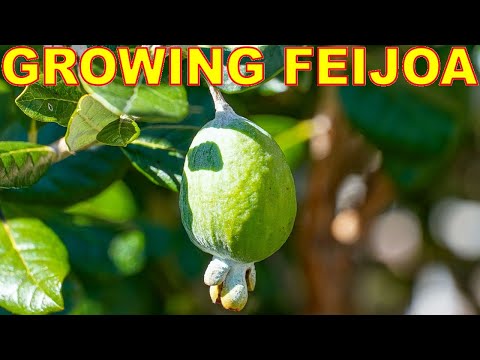
The feijoa is unique because it signals ripeness not by color change, but by gravity. The fruit will rarely turn yellow or orange; it stays green even when fully sugary and ripe.
Understanding the “Drop” Mechanism
Unlike peaches or plums that you twist off the branch, feijoas have an abscission layer—a distinct separation zone on the stem—that naturally severs when the fruit reaches maturity. Think of the tree as a smart dispenser. When the sugar content hits the right brix level (usually around 12-14%) and the seeds mature, the tree cuts the cord. Gravity takes over, and the fruit falls.
Ever wonder why some fruits split before ripening? It usually comes down to inconsistent watering during the final swell. If you starve the tree in August and flood it in September, the internal flesh grows faster than the skin, causing cracks. I maintain a strict regimen of 10-15 gallons of water per mature tree every week during the late summer heat to prevent this.
Never forcefully pull a feijoa from the tree. If you have to twist, yank, or struggle, the fruit is not ready. Forced fruit will never develop the proper floral aromatics and will taste like unripe persimmons.
The Calendar: When to Look Down
In our San Diego microclimates, harvest times shift based on how close you are to the coast. In the cool, foggy coastal bands, harvest starts later. Inland valleys like El Cajon or Escondido see fruit drop earlier due to higher heat units. Generally, the season runs from late September through January.
Different varieties also dictate the schedule. I currently manage about 50 trees of mixed cultivars, and tracking their drop times is essential for planning my market stand. Here is the breakdown of what I see in my orchard:
| Variety | Typical Harvest Window (San Diego) | Fruit Size |
|---|---|---|
| Coolidge | October – December | Medium (2-3 inches) |
| Nazemetz | Late October – December | Large (3-4 inches) |
| Mammoth | October – November | Large (3-4 inches) |
| Apollo | Late November – January | Very Large (4+ inches) |
| Trask | September – October | Medium (2-3 inches) |
My ‘Nazemetz’ trees are my reliable workhorses. They consistently drop fruit right before the holiday season, which makes them perfect for winter sales. However, nature doesn’t adhere strictly to a spreadsheet. A Santa Ana wind event in October can cause a premature drop of unripe fruit. You have to be able to tell the difference between a wind-fallen casualty and a naturally ripened gem.
To verify if a fallen fruit is truly ripe, cut it open. The jellied sections surrounding the seeds should be clear or translucent. If the jelly is white and opaque, it wasn’t ready; if it’s brown, it’s over-ripe.
The “Touch” Technique: Determining Ripeness
Just because the fruit is on the ground doesn’t mean it is perfectly ready to eat that second. It just means it is physiologically mature. Feijoas are climacteric fruits, meaning they continue to ripen after leaving the parent plant. The texture of a perfectly ripe feijoa should feel like a tennis ball that has lost about 20% of its air pressure.
When you squeeze it gently, it should yield slightly. If it feels like a golf ball, it needs to sit on your counter for 3 to 5 days. If it feels like a water balloon, you are too late—it has fermented and will taste like bad medicine. I usually collect the fruit daily. Leaving them on the ground exposes them to ants, snails, and the intense California sun, which cooks the fruit in hours.
Harvesting Protocol: Step-by-Step
Harvesting feijoa is less about picking and more about ground management. It is like an Easter egg hunt that happens every morning for two months. Our experience at Exotic Fruits and Vegetables has shown that preparation of the “landing zone” is the most critical factor in fruit quality.
- Prepare the Ground (August): About month before harvest, I clear all weeds and debris under the canopy. I lay down a 3-inch layer of soft barley straw. This acts as a cushion. A heavy Mammoth feijoa falling 6 feet onto hard adobe soil will bruise instantly, triggering rot within 24 hours.
- The Shake Test (Daily): Every morning at 7:00 AM, I gently shake the main branches. Any fruit that is 100% ready but hasn’t fallen yet will drop with a light vibration. I’m not shaking it like a polarity—just a gentle nudge.
- Collection: I gather fruit into shallow crates, not deep buckets. Stacking feijoas more than 4-5 layers deep causes the bottom ones to crush under the weight.
- Sorting: I immediately separate firm fruit from soft fruit. Firm fruit goes into cold storage (38-40°F) to pause ripening; soft fruit goes to the kitchen for immediate processing.
I once neglected the straw mulch step during a busy year. I lost nearly 30% of my harvest because the fruit hit small rocks or hard dirt, creating invisible internal bruising that turned brown two days later. That was a costly lesson in physics.
For the absolute best flavor, eat the fruit the day it drops. The floral esters are volatile and dissipate quickly, so a feijoa eaten warm from the orchard floor is a completely different experience than one from a grocery store.
Troubleshooting Early Drop
What if your fruit is falling in August and it is tiny? This is usually stress-induced abortion. The tree realizes it cannot support the crop load due to lack of water or extreme heat, so it jettisons the “cargo” to save itself. It is a survival mechanism.
If you see massive fruit drop during a heatwave (days over 95°F), increase your irrigation immediately. I switch from my standard drip schedule to deep soaking. I apply roughly 50 gallons of water per tree distributed over the week during these heat spikes. Mulching heavily helps retain that moisture.
Ever wonder why your feijoas are tiny despite watering? It might be a pollination issue. While some varieties are self-fertile, cross-pollination always yields larger fruit. Planting a ‘Coolidge’ next to a ‘Nazemetz’ is like an insurance policy for size.
Storage and Usage
Once you have harvested, the clock starts ticking loudly. Feijoas have a notoriously short shelf life, which is why you rarely see them in major supermarkets. At room temperature (68-72°F), a firm fruit will reach peak eating ripeness in 3 to 5 days. Once soft, it lasts maybe 48 hours before internal browning sets in.
However, you can hack this timeline. Placing firm, freshly harvested feijoas in the refrigerator at 40°F can extend their life up to 4 weeks. The cold puts the ripening enzymes in suspended animation. When you are ready to eat them, bring them out to room temperature for two days to wake up the flavors.
Here is what I look for when selecting fruit for customers:
- Skin: Smooth to slightly bumpy is fine, but avoid deep scabs or dark soft spots.
- Smell: It should be aromatic from a foot away. If you have to bury your nose in it to smell anything, it needs more time.
- Weight: Good fruit feels heavy for its size, like a dense stone. Light fruit usually indicates dry, cottony pulp inside.
The Culinary Payoff
Why do we go through this trouble? Because the flavor profile is impossible to replicate. It is a mix of pineapple, apple, mint, and strawberry, with a texture somewhere between a pear and a kiwi. As fruit enthusiasts at Exotic Fruits and Vegetables, we believe the best way to eat them is the simplest: cut in half and scoop out the center with a spoon. The skin is technically edible but is often too sour and bitter for most palates.
Avoid processing feijoas in a blender for smoothies if you keep the skins on. The skin contains high amounts of tannins that will turn your delicious smoothie into a bitter, mouth-puckering disaster in seconds.
One of my favorite ways to use a surplus harvest is to make a raw “feijoa fizz.” I scoop the flesh of about 20 fruits, mash it with a little honey, and mix it with sparkling water and fresh lime. It captures that ephemeral floral quality that cooking drives away. If you do cook them—say, into a chutney or jam—expect the flavor to shift towards a more traditional guava/quince profile.

Final Thoughts from the Orchard
Growing feijoas in San Diego is a lesson in observation. You cannot force the harvest; you have to attend to it. You have to listen to the weather, watch the ground, and respect the tree’s schedule. The fruit is ready when it decides to let go.
What’s the real secret to success? Consistency. Consistent water, consistent observation, and consistent harvesting. If you skip three days of harvesting in November, you will return to a carpet of rotting fruit that attracts every beetle in the county. Treat your orchard floor like a clean room, and your trees will reward you with the most aromatic, complex fruit available in North America.



Feijoas are self-fertile but pollinators like bees can increase fruit set. Hand pollination with a small brush can improve yield by 15-20%!
Regarding pollination, that’s a great point about hand pollination increasing yield. We’ve seen similar results on our farm with a 12-15% increase in fruit set when using pollinators like bees. For those looking to try hand pollination, it’s essential to use a small, clean brush to transfer pollen from the anther to the stigma, and to do this in the early morning when the flowers are most receptive.