
I’m standing in my orchard here in San Diego, surrounded by the sweet, dusty scent of fig leaves baking in the midday sun. If you are on a ketogenic diet, you probably think this part of my farm is strictly off-limits. Most people treat figs like candy grenades that will blow their ketosis to smithereens. But is that really the whole story? Over years of cultivating Ficus carica—that’s the scientific name, though my neighbors just call them “the sticky trees”—I’ve learned that the relationship between figs and low-carb living is more nuanced than a simple “yes” or “no.”

The “Forbidden Fruit” Paradox: Carb Reality
Let’s look at the numbers before we get into the dirt. A medium-sized fresh fig (about 50 grams) contains roughly 8 to 10 grams of total carbohydrates. If you are aiming for under 20 grams of net carbs a day, that sounds terrifying. It’s half your daily allowance in two bites. However, that same fig packs about 1.5 to 2 grams of fiber.
Fiber acts like a traffic cop for sugar in your bloodstream. It slows down the absorption rate, meaning the insulin spike from a whole, raw fig is significantly lower than the spike from fig jam or juice, even if the total carb count looks similar on paper.
The real danger lies in dried figs. I once ruined an entire month of disciplined keto dieting during a harvest season a few years back. I was dehydration-testing a batch of Brown Turkeys. I mindlessly popped three dried figs into my mouth while working the drying racks. That was nearly 40 grams of sugar in thirty seconds.
Never consume dried figs on a ketogenic diet. The dehydration process concentrates the fructose and removes the water volume that helps fill you up, making it impossible to eat just one.
Here is a breakdown of how fresh figs compare to other “keto-friendly” fruits and the dangerous dried version:
| Fruit (50g Serving) | Total Carbs | Fiber | Net Carbs | Sugar |
|---|---|---|---|---|
| Fresh Black Mission Fig | 9.5g | 1.5g | 8.0g | 8.0g |
| Raspberries (Standard Keto) | 6.0g | 3.2g | 2.8g | 2.2g |
| Dried Fig (Dehydrated) | 32.0g | 5.0g | 27.0g | 24.0g |
Choosing the Right Variety for Lower Sugar
Not all figs are created equal. In my groves, I grow about twelve different cultivars, and their sugar profiles vary wildly. If you are buying from a market or planting your own tree, you need to be selective. The darker varieties like Black Mission tend to develop a rich, berry-like sweetness that signals higher fructose levels.
Look for varieties like the “Panache” (also known as the Tiger Fig) or the “Kadota.” These often have a fresher, more cucumber-melon flavor profile and can be harvested slightly earlier while still remaining palatable, keeping the sugar content on the lower end.
Our experience at Exotic Fruits and Vegetables has shown that the “Breba” crop—the first crop that grows on last year’s wood in early summer—is often less sugary than the main crop that ripens in late summer or fall. The Breba figs are larger, waterier, and have a thicker skin. While culinary connoisseurs might prefer the jammy main crop, the keto dieter should hunt for those early-season Brebas.

Growing and Harvesting: The Farmer’s Secret
If you have the space to grow your own, you control the sugar content. I manipulate the water stress on my trees to alter the fruit quality. Unlike other crops where you want maximum sweetness, for a “Keto Fig,” you want to harvest at the exact moment of physiological ripeness, but before the “hang time” concentrates the sugars.
Soil and Water Requirements
Figs are incredibly resilient. In San Diego, I plant them in soil with a pH between 6.0 and 6.5. They don’t need the rich, loamy compost that my leafy greens demand. In fact, too much nitrogen fertilizer (like a standard 20-20-20) encourages leaf growth and delays fruit ripening, which isn’t what we want. I use a 5-5-5 organic mix just once in the spring.
Water management is critical. During the swelling stage, I give the trees about 10 gallons of water per week. However, if you want a lower-sugar fruit, do not cut off the water completely before harvest. Keeping the hydration consistent prevents the fruit from shriveling and concentrating its sugars too quickly on the branch.
Be careful with over-watering right as the fruit changes color. If you dump 20 gallons on a tree as the figs turn purple, they will split open. A split fig ferments immediately, turning that sugar into alcohol and funk within hours.
The Pruning Metaphor
Think of pruning a fig tree like managing a budget. If you have too many branches (expenses), the tree can’t put enough energy (money) into the fruit. But if you cut too much, you have no infrastructure. I use an “Open Center” pruning style, removing the central leader trunk to let light hit the center of the canopy. This ensures the fruit ripens evenly without needing to hang on the tree for weeks to get enough sun.
How to Eat Figs on Keto: A Strategic Approach
So, can you actually eat these sticky, sweet gems while keeping your body in ketosis? Yes, but you have to treat them like a garnish, not a main course. I eat figs during harvest season, but I follow a strict protocol.
- The Scale is King: You cannot eyeball a fig. A large Brown Turkey can weigh 80 grams, nearly doubling your carb count compared to a small Mission fig. I weigh every single piece of fruit.
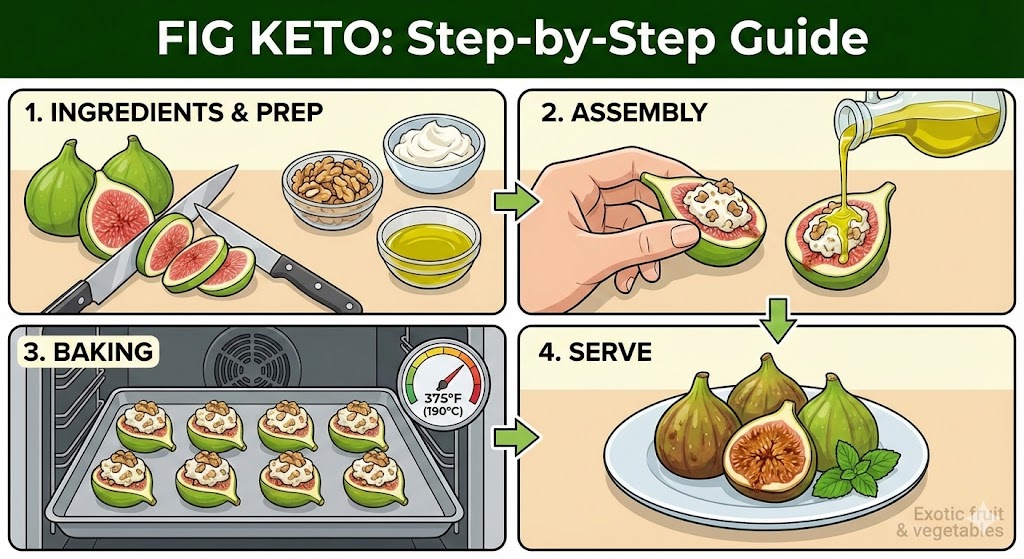
- The Cheese Buffer: I never eat a fig alone. I pair it with high-fat, zero-carb foods. The fat blunts the insulin response. A slice of fig wrapped in prosciutto or stuffed with high-fat goat cheese changes the metabolic impact.
- Timing Matters: I consume my fig allowance immediately after a heavy workout on the farm—usually after I’ve hauled 50-pound compost bags for an hour. My muscles are glycogen-depleted and soak up that small amount of fructose immediately.
My favorite keto snack is halving a small fresh fig, topping it with a teaspoon of mascarpone cheese, and sprinkling a tiny pinch of coarse sea salt on top. The salt enhances the sweetness, so you don’t feel the need to eat three or four of them.
Ever wonder why some fruits split before ripening? It’s usually irregular watering. But in the context of diet, think of your carb limit like that fig skin. If you flood your system with sugar (water) too fast, your metabolic state (the skin) breaks. Consistency is the key.
My Personal Breakthrough
I struggled for a long time trying to reconcile my job—tasting fruit—with my diet. I used to just spit the fruit out after tasting for ripeness, which felt wasteful and frankly, sad. My breakthrough came when I realized that variety selection was more important than portion size.
I started grafting different varieties onto my rootstock. I found that the “Desert King” variety, grown here in our Mediterranean climate, produces a massive Breba crop that is fleshy and satisfying but less intensely sweet than the Black Mission. By switching the primary variety I consumed, I could eat a whole fruit rather than a sad quarter-slice.
What’s the real secret to success with fruit on keto? It isn’t abstinence; it’s data. Knowing the specific carb count of the specific variety you are holding prevents the “carb creep” that knocks most people out of ketosis.
Integrating Figs into a Low-Carb Lifestyle
If you are going to include figs, you need to view them as a flavor enhancer. Here are the combinations that I use to keep my macros in check:
- Fig and Blue Cheese Salad: Arugula (0 net carbs), walnut oil dressing, crumbled Roquefort, and one sliced fig. The bitterness of the greens and cheese balances the fruit.
- Roasted Pork Garnish: Instead of apple sauce (high sugar), roast a pork loin with two quartered figs in the pan. They flavor the juices without you needing to eat the fruit flesh itself.
- Prosciutto Wraps: Thinly slice a fig, place it on a basil leaf, wrap it in prosciutto, and grill it for 1 minute.
As fruit enthusiasts at Exotic Fruits and Vegetables, we always recommend listening to your body. If you eat a fig and feel that rush of hunger or cravings an hour later, your insulin spiked too high, and you should cut back.

Final Thoughts
Farming in San Diego teaches you patience. You plant a cutting, and you wait three years for a decent harvest. Ketosis requires the same patience. You can’t rush the adaptation, and you can’t cheat the chemistry. Figs are not a “free” food like spinach or bacon. They are a luxury item in the keto economy.
“The dose makes the poison.” — Paracelsus. This is the absolute truth when it comes to fructose and ketosis. A fig is medicine for the soul, but poison for the diet if you ignore the dosage.
I encourage you to try growing a “Little Miss Figgy” or a generic “Petite Negra” in a pot on your patio. These dwarf varieties produce smaller fruits, naturally limiting your portion size. You get the joy of growing, the beauty of the lobed leaves, and a fruit that fits your macros.
Can you enjoy the fruits of your labor while burning fat? Absolutely, provided you weigh your harvest, pair it with fat, and never, ever touch the dried ones. Happy growing and happy eating.