
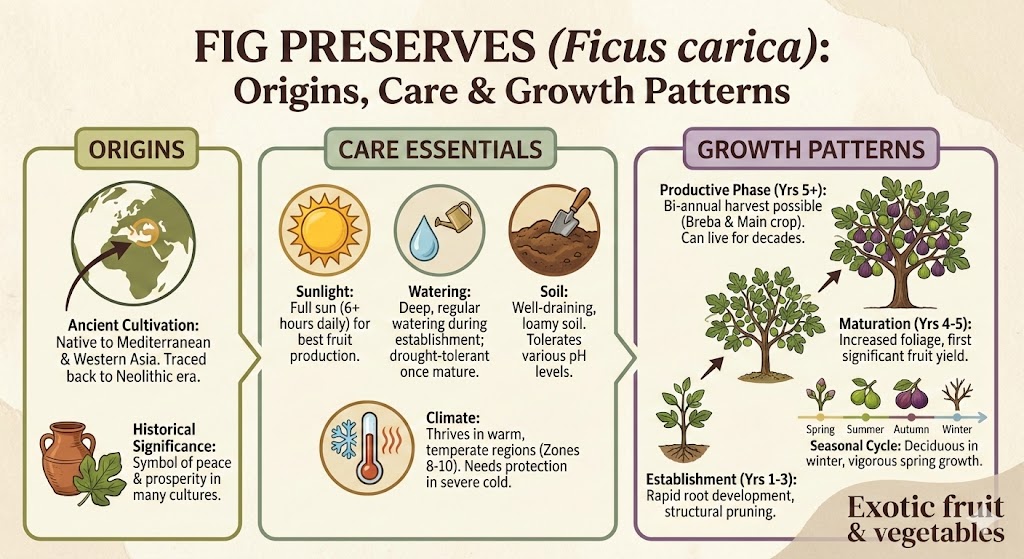
September in San Diego brings a specific kind of panic to my farm. It’s not a pest outbreak or a heatwave; it’s the sudden, overwhelming abundance of our Black Mission and Brown Turkey figs. One day the trees are full of hard green nodules, and 48 hours later, I’m standing knee-deep in buckets of purple fruit that are softening by the minute. If you have a fig tree, you know this race against the clock. Fresh figs (Ficus carica) have a shelf life of about three days before they start to ferment on the counter.
Botanically speaking, the fig isn’t actually a fruit but an inverted flower cluster called a syconium. Those tiny crunching seeds inside are the actual fruit, or achenes.
Preserving is the only logical answer to a harvest that yields 150 pounds of fruit in a two-week window. I used to view canning as a chore, but now I see it as capturing the San Diego sunshine in a jar. Over the years, I’ve moved away from generic recipes and dialed in a method that highlights the fruit’s complex, honeyed flavor without burying it in processed sugar.
Here at Exotic Fruits and Vegetables, we’ve found that the difference between a mediocre jam and an award-winning preserve lies entirely in the harvest timing. You cannot use supermarket logic here.

Selecting the Right Fruit: The “Droop” Technique
Great preserves start on the tree. I see too many home growers picking figs when they look like the ones in the grocery store—firm and round. That is a mistake. For the deepest flavor, you want the fig to hang on the tree until its neck shrivels slightly and the fruit droops heavily, almost looking like a deflated balloon.
Wait for the “tear in the eye.” A perfectly ripe fig will often exude a single drop of nectar from the ostiole (the eye) at the bottom. This indicates the sugar content has peaked around 20-25% Brix.
I once ruined an entire batch by picking 20 pounds of Kadota figs two days too early. I thought they would ripen on the counter like avocados or bananas. They didn’t. They just turned rubbery and lacked that essential jammy interior. Figs cease ripening the moment you sever the stem from the branch.
Varieties Matter
Not all figs cook down the same way. I cultivate several varieties here in our Zone 10b climate, and they each behave differently in the pot.
| Variety | Flavor Profile | Preserve Characteristics |
|---|---|---|
| Black Mission | Deep, earthy, berry-like | Thick, dark purple jam; holds texture well |
| Brown Turkey | Mild, sweet, melon-like | Lighter amber color; breaks down into a smooth spread |
| Kadota | Honey, light floral | Golden green preserve; requires less sugar |
| Tiger Stripe (Panache) | Berry jam, acidic punch | Visually stunning; high acidity helps the set |
The Chemistry of the Jam
Making preserves is less like cooking and more like a high school chemistry experiment where the stakes are deliciousness. You are balancing three elements: pectin, acid, and sugar. Figs are naturally low in acid and have moderate pectin, which makes them tricky.
Never skimp on the bottled lemon juice. You need a pH below 4.6 to safely prevent botulism in water bath canning, and fresh lemons vary too much in acidity.
I don’t use commercial pectin anymore. I find it gives the jam a stiff, gelatinous texture that feels artificial. Instead, I rely on time and evaporation. By cooking the fruit longer, we evaporate water and concentrate the natural pectin found in the skins.
Through our work with Exotic Fruits and Vegetables farm, we realized that maceration—soaking the fruit in sugar before cooking—is the secret step most recipes skip. It draws the juices out slowly, dissolving the sugar without scorching, and keeps the fruit chunks intact.
My “San Diego Sunset” Fig Preserve Recipe
This method yields about 5 half-pint jars. I recommend working in small batches; doubling the recipe often leads to burning because the pot volume changes the evaporation rate.
Ingredients
- 2 pounds (900g) ripe figs, stems removed and quartered
- 1.5 pounds (675g) granulated sugar
- 1/2 cup (120ml) bottled lemon juice
- 1 teaspoon vanilla bean paste (optional, but recommended)
- 1/2 teaspoon kosher salt (cuts the sweetness)
Step-by-Step Instructions
- Macerate the Fruit: Combine the quartered figs and sugar in a large, non-reactive bowl (glass or stainless steel). Stir gently. Cover and let it sit on the counter for 2 hours, or in the fridge overnight. The sugar will pull water from the figs, creating a syrup.
- The Boil: Transfer the mixture to a wide, heavy-bottomed pot. A Dutch oven works best. Add the lemon juice and salt. Bring to a rolling boil over medium-high heat.
- The Cook Down: Reduce heat to medium to maintain a steady simmer. You must stir frequently to prevent the sugars from scorching on the bottom. I use a flat-edged wooden spoon to scrape the bottom of the pot.
- Temperature Check: Cook until the mixture reaches the gel point. The target temperature is exactly 220°F (104°C) at sea level. If you don’t have a thermometer, use the “wrinkle test” by putting a dollop on a frozen plate. If it wrinkles when you push it, it’s done. This usually takes 25-45 minutes depending on the pot width.
- Jarring: Ladle the hot jam into sterilized half-pint jars, leaving 1/4 inch of headspace. Wipe the rims with a clean, damp cloth. Apply the lids and bands until fingertip tight.
- Processing: Process in a boiling water bath for 10 minutes. Turn off the heat and let the jars sit in the water for 5 more minutes before removing.
Pro Tip: Add a strip of lemon zest during the boil and remove it before jarring. It infuses the syrup with citrus oil without adding bitterness.
What’s the real secret to success? Patience during the boil. I once tried to rush a batch by cranking the heat to high. I stepped away to answer a phone call and came back to a kitchen filled with black smoke. The sugar had caramelized into carbon on the bottom of my favorite Le Creuset. Cleaning that pot was a three-day nightmare involving baking soda and tears.
Safety and Storage
Think of the water bath like sealing a time capsule. The boiling water kills microorganisms and forces air out of the jar, creating a vacuum seal as it cools. You’ll hear a distinct “ping” sound as the lids pop down—that sound is music to a canner’s ears.
If a jar does not seal (the button on the lid pops back up when pressed), do not store it in the pantry. Put it in the refrigerator immediately and eat it within a month.
Properly sealed jars will last 12 to 18 months in a cool, dark pantry. However, once you open a jar, the clock starts ticking again, and you have about 3-4 weeks to consume it from the fridge. In my house, a jar rarely lasts three days.

Serving Your Liquid Gold
While spreading this on toast is the classic move, these preserves are capable of so much more. The sweet-savory balance of figs makes them a powerhouse in the kitchen. Ever wonder why some appetizers steal the show? It’s usually a fruit-cheese pairing.
“A fig without cheese is like a kiss without a hug.” — Old Provencal saying (or maybe just something my grandfather used to say).
I use these preserves as a glaze for pork tenderloin. I mix half a cup of preserves with two tablespoons of balsamic vinegar and brush it on the meat for the last 10 minutes of roasting. The sugars char slightly, creating a crust that is out of this world.
Our team at Exotic Fruits and Vegetables loves swirling a spoonful into Greek yogurt with walnuts for breakfast. It’s a simple way to start the day with something that feels decadent but connects you directly to the land.
Have you ever tried pairing fig preserves with blue cheese on a cracker? The funk of the cheese cuts right through the sugar of the fig.
Growing and preserving food changes your relationship with the seasons. You stop seeing winter as a dead time and start seeing it as the time to open the jars you worked so hard on in September. It’s a delicious cycle, and one I wouldn’t trade for anything.
If you have a fig tree, don’t let those fruits fall to rot. Grab a pot, some sugar, and preserve the harvest. Your future self, eating fig jam on a cold February morning, will thank you.