
I still remember the first time I cut into a perfectly ripe White Genoa fig. It was a scorching Tuesday afternoon here in San Diego, the kind where the asphalt shimmers, and I had been debating whether this particular tree was worth the garden space. One bite of that amber-fleshed, honey-dripping fruit changed everything; it tasted like strawberry jam mixed with a subtle nuttiness that you simply cannot buy at a grocery store.
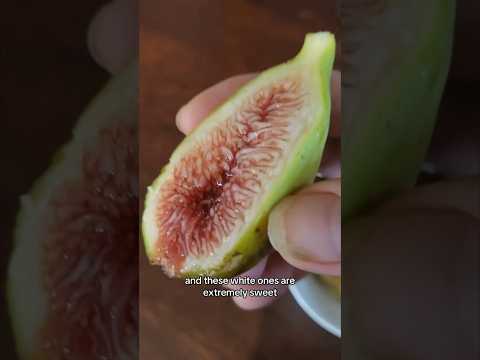
If you are reading this, you probably want to know how to replicate that experience. White figs, known scientifically as Ficus carica (specifically varieties like the White Adriatic, Kadota, or Conadria), are deceptive. They aren’t actually white. They range from a pale yellowish-green to a bright chartreuse, and they are hands down some of the most rewarding producers for our Southern California climate.
But with so many dark fig varieties dominating the market, why should you dedicate precious soil to these pale cousins?
The answer lies in their complex flavor profile and their ability to withstand our intense heat without turning into dried raisins on the branch. Unlike their dark counterparts, white figs often maintain a higher moisture content and a lighter, more floral sweetness.
Understanding the Varieties: It’s Not Just One “White” Fig
“White Fig” is a catch-all colloquial term that confuses many new growers. In my orchard, I manage about four distinct types that fall under this umbrella, and knowing the difference is critical for your success. You have the Smyrna types (like the Calimyrna) which require pollination, and the Common types which do not.
Most backyard growers should stick to Common types. These are parthenocarpic, meaning they produce fruit without fertilization from the specialized fig wasp, Blastophaga psenes.
Here at Exotic Fruits and Vegetables, we’ve found that beginning growers often fail because they buy a Calimyrna tree from a big-box store, not realizing it will drop every single fruit if the specific pollinator wasp isn’t present in their neighborhood.
Site Selection and Soil Preparation
Figs are survivors, often clinging to rocky cliffs in the Mediterranean, but we want them to thrive, not just survive. You need a location that receives a minimum of 8 hours of direct, unfiltered sunlight. If you plant them in the shade of a larger oak or a building, you will get leggy growth and zero fruit.
Soil preparation is where the battle is won or lost. Figs tolerate poor soil, but they hate “wet feet.” In my early years, I planted a beautiful Conadria in a heavy clay depression at the bottom of a slope. The water pooled there every winter. By spring, the roots had suffocated from lack of oxygen, and the tree was dead.
For optimal growth, aim for a soil pH between 6.0 and 6.5. If your soil is heavy clay, build a raised mound 12 to 18 inches high to ensure the crown stays dry.
Think of the soil as a battery for your tree. If the battery is corroded (poor drainage) or empty (no nutrients), the machine won’t run. I amend my planting sites with 40% native soil, 30% coarse sand or perlite for drainage, and 30% finished compost. This mix provides the drainage of their native habitat while retaining enough moisture to support fruit production.
Planting and Establishment: The First Critical Year
When you put your white fig in the ground, you are making a commitment for the next 20 to 30 years. I treat planting day like a surgical procedure—everything needs to be precise.
- Dig the Hole: Excavate a hole that is three times as wide as the nursery pot but no deeper than the root ball. Deep planting is a death sentence for figs.
- Root Inspection: If the roots are circling the pot (root-bound), aggressively tease them outward. I once used a serrated knife to slice an “X” across the bottom of a root-bound Kadota, and it responded with three feet of growth in year one.
- Backfill and Water: Fill the hole with your amended soil mix. Water it in halfway through filling to eliminate air pockets.
- Mulch Heavy: Apply a 4-inch layer of wood chips starting 6 inches away from the trunk and extending to the drip line. This keeps the roots cool during our 90°F September heatwaves.
- Prune Immediately: Cut the main trunk back to 24 inches high. This forces low branching, which makes harvesting easier later.
Never put fertilizer directly into the planting hole. It will burn the tender feeder roots and set the tree back by months.
Watering: The Goldilocks Zone
How much water does a white fig actually need? The internet says “lots,” but that is useless advice. In San Diego’s dry season, an established tree needs deep watering, not frequent sprinkling.
For a one-year-old tree, I apply roughly 5 gallons of water twice a week. Once the tree is established (3+ years), I switch to a deep soak of 20-30 gallons every 10 to 14 days. This forces the roots to dive deep into the subsoil to find moisture. If you water lightly every day, the roots stay near the surface and cook in the summer heat.
I use a simple drip line system with 1-gallon-per-hour emitters spaced 12 inches apart in concentric rings around the tree. It takes the guesswork out of the volume.
Feeding the Beast: Fertilization Strategy
White figs are vigorous growers. If you pump them full of nitrogen, they will grow six feet of lush green wood and give you zero figs. It’s a classic rookie mistake.
I use a balanced approach. In late February, just as the buds swell, I apply a granular organic fertilizer with an N-P-K ratio of 5-5-5. I scatter about 1 cup per inch of trunk diameter. Then, in late May, I do a second lighter application to support the main crop ripening.
Our experience at Exotic Fruits and Vegetables has shown that adding a layer of composted chicken manure in January provides the perfect slow-release calcium boost prevents fruit splitting later in the season.
The Harvest: Patience is a Virtue
Ever wonder why some store-bought figs taste like cardboard? It’s because figs do not ripen after they are picked. You have to wait until the absolute last second to harvest, which makes shipping them commercially a nightmare but growing them at home a delight.
A ripe white fig signals its readiness clearly. The neck of the fruit will droop, as if it has lost the will to hold itself up. The skin of varieties like the White Adriatic will often develop small cracks or “stretch marks.” This is sugar stress, and it is a good thing.
- The Touch Test: The fruit should feel like a half-filled water balloon—soft and yielding.
- The Color Shift: Green varieties will often turn a pale yellow or develop a slight translucency.
- The Ant Factor: If you see ants marching toward a specific fruit, it’s likely leaking sugar and is ready to eat.
I once ruined an entire batch by picking them when they were firm, thinking they would soften on the counter. They softened, sure, but they never developed sugar. It was like eating a raw potato.
“A fig that looks perfect is usually underripe. Look for the ugly, drooping, cracked fruit for the best flavor.”
Comparison of Top White Fig Varieties for San Diego
Choosing the right variety is half the battle. Here is how the top contenders stack up based on my harvests last year.
| Variety | Flavor Profile | Skin Thickness | Harvest Window |
|---|---|---|---|
| White Adriatic | Strawberry jam, very sweet | Thin (prone to splitting) | August – October |
| Kadota | Honey, resin, mild | Thick (great for canning) | July – September |
| Conadria | Sweet, mild, fruity | Medium (resists spoilage) | August – September |
| Panache (Tiger) | Berry-like, moderate sweetness | Medium (striped skin) | Late August – October |
Pests and Problems
We are lucky in San Diego; we don’t have many of the fungal issues that plague the East Coast. However, we do have the Green Fig Beetle (Cotinis mutabilis). These metallic clumsy tanks will dive-bomb your ripening fruit and turn it into a fermented mess.
I don’t spray poisons.
Instead, I use exclusion. Organza bags tied around individual fruit clusters are the only 100% effective method to stop beetles without using chemicals. It is labor-intensive, but would you rather spend time bagging fruit or eating beetle larvae?
Another issue is Rust, a fungal disease that causes leaves to yellow and drop early. It usually hits us during “May Gray” or “June Gloom.”
If you see rust-colored spots on the underside of leaves, rake up and destroy all fallen leaves immediately. Do not compost them, or you will reinfect your tree next year.
Pruning: The Open Vase Method
Pruning a fig tree is like giving a poodle a haircut; if you don’t do it, things get matted and messy. I prune exclusively in January when the tree is dormant.
I use the “Open Vase” technique. I remove the central leader and encourage 3 to 4 main scaffold branches growing outward at 45-degree angles. This keeps the center of the tree open to sunlight and airflow, which reduces mold issues and ripens the fruit evenly.
Avoid “heading cuts” (cutting the tips off branches) in the summer. This stimulates vegetative growth right when the tree should be focusing energy on ripening fruit.
Through our work with Exotic Fruits and Vegetables farm, we have observed that trees pruned to a height of 6 feet are not only easier to harvest but actually produce higher quality fruit because the sap doesn’t have to travel as far.
Why This Matters
Growing white figs connects you to an ancient agricultural lineage. There is something profoundly satisfying about walking out to your backyard, dodging a bee, and pulling a warm, soft fruit off the tree that contains the concentrated energy of the San Diego sun.
So, are you ready to dig that hole? The best time to plant was ten years ago. The second best time is today. Grab a shovel, get some high-quality wood chips, and start your own legacy. Just remember: patience, drainage, and aggressive pruning are the keys to the kingdom.
We at Exotic Fruits and Vegetables believe that every garden has space for at least one fig tree. It requires so little and gives so much. When you taste that first proper harvest, you’ll understand exactly why I spend my summers fighting off beetles and watering dirt. It is absolutely worth it.