Hey there! I’m Mike, and I’ve been growing guava (Psidium guajava) for over 12 years now. Let me tell you, these tropical beauties, also known as goiaba, yellow guava, or tropical guava, can be a bit finicky when it comes to their nutritional needs. Today, I’m going to share my tried-and-tested fertilization schedule that has helped me produce some of the sweetest, juiciest guavas you’ve ever tasted.
Understanding the Basics: Why Timing Matters
Let me start by saying that fertilizing guava trees isn’t just about throwing some nutrients at them and hoping for the best. Think of it like feeding a professional athlete – timing and balance are everything! In my experience, guava trees are heavy feeders, but they need different nutrients at different growth stages.

The key is to understand that guava trees have distinct growth phases throughout the year. Just like how we humans need different types of nutrition during different life stages, guava trees have varying nutritional needs during vegetative growth, flowering, and fruiting periods.
The Annual Fertilization Calendar
Spring Wake-Up Call (Early Spring)
The spring fertilization is what I like to call the “wake-up call” for my guava trees. As temperatures begin to rise and days get longer, this is when the trees need their first major feeding of the year. I typically apply a balanced NPK fertilizer (something like 6-6-6 or 8-8-8) in early spring, usually around when I see the first new leaves appearing.
Here’s a pro tip: I always make sure to spread the fertilizer evenly around the drip line of the tree. Think of it as creating a nutrient ring around the tree – this ensures that the entire root system gets access to the nutrients they need.
Don’t forget to water thoroughly after application. The soil should be moist but not waterlogged. I usually apply about 1-2 pounds of fertilizer per year of tree age, up to a maximum of 10 pounds for mature trees.
Summer Growth Boost (Late Spring/Early Summer)
When summer rolls around, that’s when my guava trees really kick into high gear. This is their prime growing season, and they need plenty of nitrogen to support all that new growth. During this period, I switch to a slightly higher nitrogen formula (like 10-5-5).
I’ve found that splitting the summer fertilization into two applications works best – one in late spring and another in early summer. This prevents nutrient leaching and gives the trees a steady supply of nutrients throughout their peak growing season.
Remember to keep an eye on your trees’ response. If the leaves start looking too dark green or you’re getting lots of vegetative growth but little fruit, you might want to dial back the nitrogen a bit.
Fruit Development Phase (Mid to Late Summer)
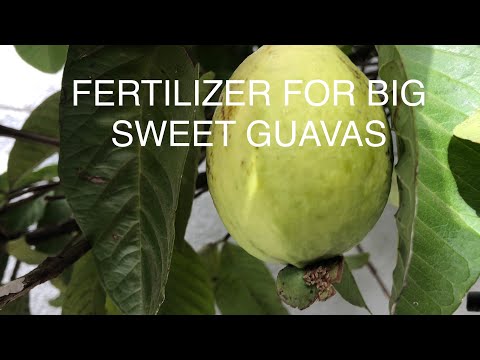
Now, this is where things get really interesting! When the trees start setting fruit, their nutritional needs change dramatically. During this phase, I switch to a fertilizer higher in phosphorus and potassium (something like 3-7-7) to support fruit development.
The timing here is crucial – too early or too late, and you won’t get the best results. I typically make this transition when I see the first fruit sets beginning to form. This usually happens around mid-summer in my orchard.
Also, this is when I start incorporating more micronutrients into my fertilization program. Zinc and boron are particularly important for fruit development in guavas.
Special Considerations and Pro Tips
Soil pH and Nutrient Availability
Here’s something many beginners overlook – soil pH dramatically affects nutrient availability. Guava trees prefer slightly acidic soil (pH 5.5-7.0). I check my soil pH at least twice a year and adjust accordingly.
If your soil pH is off, you could be fertilizing perfectly but still have nutrient-deficient trees. It’s like trying to drink through a blocked straw – the nutrients are there, but the trees can’t access them properly.
Young vs. Mature Trees
- Young trees (under 3 years): Fertilize every 6-8 weeks during growing season, using half the standard amount
- Mature trees (over 3 years): Fertilize 3-4 times per year following the seasonal schedule

Prevention and Troubleshooting
Common Issues and Solutions:
- Yellow leaves: Usually indicates nitrogen deficiency – address with foliar spray
- Fruit drop: May be due to calcium deficiency – supplement with calcium nitrate
- Poor growth: Check soil pH and adjust fertilization accordingly
Economic and Environmental Considerations
Finally, let’s talk about sustainability. I’ve found that incorporating organic matter into my fertilization program not only improves soil health but also reduces the need for chemical fertilizers over time. I use a combination of compost, aged manure, and chemical fertilizers to achieve the best results while maintaining soil health for the long term.
Think of it as building a savings account for your soil – the more you invest in organic matter now, the less you’ll need to spend on fertilizers in the future. Plus, it’s better for the environment and produces healthier, more flavorful fruit!