
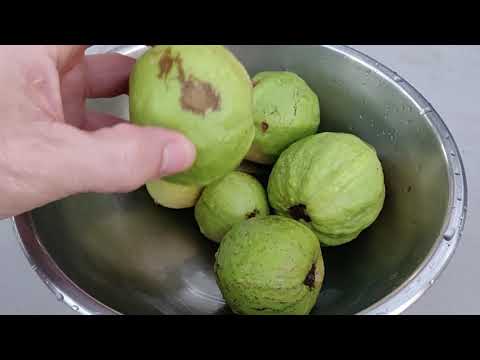
As a farmer who’s handled thousands of guavas (Psidium guajava), I’ve learned that your eyes are your best initial tool for spotting spoilage. When examining a guava, keep an eye out for these telltale signs:
- Dark spots that are soft to the touch
- Bruising that covers more than 25% of the fruit
- Mold growth (usually appears as white, green, or black fuzzy patches)
- Unusual discoloration or brown patches
- Wrinkled or severely shriveled skin
- Split or cracked areas that look moist
Remember, some natural spots or slight blemishes don’t necessarily indicate spoilage. In fact, I often tell my customers that a few small brown spots on ripe guava can actually indicate higher sugar content.
Texture Changes: The Touch Test
In my years of growing and handling guavas, I’ve developed what I call the “pressure test.” Here’s what to look for when you handle the fruit:
- Gentle Squeeze Test:
- Fresh guava: Should yield slightly to pressure but bounce back
- Spoiled guava: Will either be mushy or rock hard
- Over-ripe but still good: Very soft but without wet spots
- Surface Texture:
- Fresh guava: Firm and slightly bumpy
- Spoiled guava: Slimy or sticky surface
- Warning signs: Unusual indentations or soft spots
Aroma Assessment: Trust Your Nose
One of the most reliable ways to detect spoilage is through smell. As someone who works with these fruits daily, I can tell you that the aroma profile changes dramatically when guava goes bad:
Fresh Guava Should Smell:
- Sweet and tropical
- Slightly musky
- Similar to a combination of strawberry and pear
- Fragrant but not overpowering
Spoiled Guava Will Smell:
- Fermented or wine-like
- Strongly sour
- Musty or moldy
- Like vinegar
- Unpleasantly pungent
Internal Inspection: Cut and Examine
If the external examination leaves you unsure, it’s time to cut the fruit open. Here’s what I look for:
Signs of Good Quality:
- Consistent color throughout (white, pink, or red depending on variety)
- Seeds that are firm and clean
- Flesh that’s firm but tender
- Clear division between pulp and rind
Signs of Spoilage:
- Brown or discolored flesh
- Waterlogged or mushy sections
- Dark spots around seeds
- Hollow areas or unusual cavities
- Flesh separating from the rind
Storage History: Prevention Is Key
As a farmer, I know that proper storage is crucial for preventing spoilage. Here’s what affects guava’s shelf life:
Storage Temperature Impact:
- Room temperature: 2-4 days
- Refrigerated (45-50°F): 1-2 weeks
- Signs of improper storage:
- Accelerated ripening
- Uneven texture
- Cold damage (dark spots)
Common Misconceptions vs Reality
Through my experience, I’ve encountered several myths about guava spoilage. Let me clarify some points:
Myths Debunked:
- “All soft guavas are spoiled”
- False: Ripeness varies by variety
- “Green guavas are unripe”
- Not always: Some varieties stay green when ripe
- “Brown spots always indicate spoilage”
- False: Small brown spots can be sugar spots
When In Doubt: Safety Guidelines
As someone who’s dedicated their life to fruit farming, I always emphasize these safety rules:
Play It Safe When You Notice:
- Any signs of mold
- Unusual odors
- Excessive softness
- Leaking juice
- Fermented smell
Safe Handling Tips:
- Always wash guavas before cutting
- Use clean cutting boards and knives
- Remove damaged portions immediately
- Store cut fruit properly sealed
- Check daily for spoilage signs
Professional Tips for Longer Storage
After years of handling guavas, here are my top tips for extending shelf life:
- Selection:
- Choose firm fruits with slight give
- Avoid fruits with damages
- Pick ones with intact stems
- Storage:
- Keep unwashed until ready to use
- Store at proper temperature
- Avoid plastic bags (use paper)
- Keep away from other ripening fruits
- Handling:
- Handle gently to prevent bruising
- Clean storage area regularly
- Check daily for ripeness
- Remove any spoiled fruit immediately
Remember, when it comes to guava, it’s better to be safe than sorry. If you’re ever in doubt about whether a guava has spoiled, trust your instincts and discard it. The small cost of replacing a questionable fruit far outweighs any potential health risks.