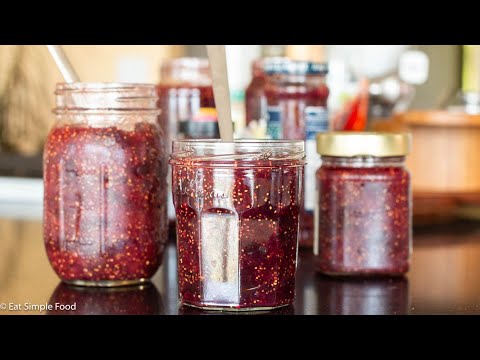
Standing in the middle of my orchard in San Diego during late August, the air smells thick with the scent of fermenting sugar. We just pulled 400 pounds of Black Mission and Brown Turkey figs (*Ficus carica*) off the trees in a single weekend. When you process that much fruit into jam, you stop looking at the jar as just a condiment and start seeing it as a powerful, concentrated sugar bomb that demands a counterbalance.
I learned this the hard way years ago when I served a straight fig jam on soft brie without any acidic fruit to cut the sweetness; the result was a cloying, heavy mess that coated the palate like syrup.
The secret to elevating fig jam lies in pairing it with fruits that possess specific structural and chemical properties: high acidity (low pH), distinct crunch, or astringency. Fig jam is dense, featuring a pH usually around 4.6 to 5.0, which is actually quite low in acid compared to other fruit preserves. To make it sing, you must introduce partners that sit on the opposite end of the texture and flavor spectrum.
Ever wonder why a slice of sharp apple tastes so good with sweet dips?
It is the interplay of texture and acid. Through my work with Exotic Fruits and Vegetables farm, I have spent years testing these combinations right here in the field, often grabbing a piece of fruit straight off the branch to test against a fresh batch of preserves. Let’s dig into the specific fruits that transform a simple jar of fig jam into a gastronomic experience.
The Acid Cut: Citrus Pairs That Bite Back
The most effective way to neutralize the intense sweetness of fig preserves is with citrus. However, you cannot just use any orange. You need varieties that offer bitterness or intense tartness. My absolute favorite pairing is the Kumquat (*Citrus japonica*). Unlike other citrus, you eat the entire kumquat, skin and all. The skin is sweet, but the flesh and juice are shockingly sour.
I slice Nagami kumquats into thin, 1/8-inch rounds and lay them directly on top of a crostini smeared with fig jam. The explosion of sour juice instantly cuts through the jam’s density. We grow about twenty kumquat trees on the south ridge of our property, and they ripen in late winter, which is perfect for using up the jarred jam from the previous summer’s fig harvest.
For the best flavor profile, look for kumquats that are deep orange and slightly soft to the touch; green-tinged fruit will be too bitter even for the jam.
Another heavy hitter is the Blood Orange (*Citrus × sinensis*). Specifically, the Moro variety, which we cultivate here in San Diego’s Mediterranean climate. The raspberry-like notes in a Moro blood orange bridge the gap between the earthy fig and the bright citrus acid. I recommend supreme-ing the orange (removing the pith and membrane) and placing a single segment atop the jam.
The Texture Contrast: Pome Fruits
Fig jam is soft, containing tiny seeds that offer a gritty crunch, but it lacks structural integrity. You need a vehicle that snaps. Apples (*Malus domestica*) and pears (*Pyrus*) are the workhorses here. But be careful—a mealy Red Delicious will ruin the experience.
You want a Granny Smith or a Pink Lady. The Granny Smith has a pH of roughly 3.2, which is acidic enough to act as a palate cleanser. I slice them vertically, about a quarter-inch thick, using the apple slice itself as the cracker. This eliminates the need for bread and highlights the raw agricultural product.
Avoid using overripe pears with fig jam; the texture becomes “mush on mush,” which is unpleasant to eat and visually unappealing.
Here at Exotic Fruits and Vegetables, we’ve found that growing Asian Pears (*Pyrus pyrifolia*) has revolutionized our tasting tables. Asian pears differ from European pears because they stay crisp like an apple even when fully ripe. A slice of Hosui Asian pear, which has a high water content, provides a refreshing juice that dilutes the thick jam in your mouth, creating a perfect sauce instantly.
Comparing Fruit Textures with Fig Jam
I created this breakdown based on our tasting room feedback to help you visualize why texture matters as much as flavor.
| Fruit Companion | Texture Profile | Why It Works |
|---|---|---|
| Asian Pear (*Pyrus pyrifolia*) | High Crunch, High Water | Dilutes jam viscosity; adds refreshing snap. |
| Granny Smith Apple | Hard Crunch, Low Water | Provides a sturdy base; high acid cuts sugar. |
| Fresh Figs (*Ficus carica*) | Soft, Jammy | Too similar. creates a monolithic texture. |
| Kumquat (*Citrus japonica*) | Chewy Skin, Bursting Juice | Complex mouthfeel; skin adds essential oils. |
Stone Fruits: The Savory Bridge
Many people forget that stone fruits like peaches (*Prunus persica*) and nectarines share a genetic affinity with almonds, giving them a latent savory quality. When paired with fig jam, fresh peaches can sometimes get lost. The solution is heat. Grilling a peach caramelizes its natural sugars and creates a smoky char that grips the earthy notes of the figs.
I once ruined an entire batch of appetizers by putting cold fig jam on cold peach slices—it just tasted like a fruit salad gone wrong. The breakthrough came when I threw the Halford cling peaches on the grill for 3 minutes per side until they had distinct char marks. Applying a glaze of fig jam while the peach is still hot allows the jam to melt into the fibers of the fruit.
The Maillard reaction (browning) on grilled fruit creates complex flavor compounds that mimic the deep, molasses-like flavor of cooked figs.
Apricots (*Prunus armeniaca*) are another stellar option, specifically the Blenheim variety if you can find them. Blenheims are notoriously fragile and rarely ship well, which is why we cherish the two trees we have. Their intense tartness, often described as a “musky” acidity, stands up to the fig jam better than any other stone fruit.
Exotic Options from the San Diego Grove
Living in Zone 10b allows us to experiment with sub-tropicals that most farmers markets do not carry. One of the most surprising successes we discovered is the pairing of Dragon Fruit (*Hylocereus*), specifically the red-fleshed varieties like ‘American Beauty’.
Red dragon fruit has a mild, kiwi-like flavor that doesn’t compete with the fig, but its texture is what matters. The seeds in dragon fruit are similar to fig seeds but slightly larger and crunchier. When you mix them, you get a textural symphony. It looks stunning, too—the neon magenta of the dragon fruit against the deep purple-brown of the fig jam.
Using Fuyu Persimmons (*Diospyros kaki*) in November is a game changer because their harvest overlaps perfectly with the consumption of late-summer preserves.
Fuyu persimmons are non-astringent and can be eaten hard like an apple. They have distinct notes of cinnamon and cane sugar. I slice them into disks and dollop the jam in the center. It tastes like autumn on a plate.
The Science of the Perfect Bite
Building the perfect vessel for your fig jam isn’t just about throwing things together; it is about engineering a bite that hits all five taste receptors. We at Exotic Fruits and Vegetables believe in a “layering” philosophy that treats the fruit as the foundation.
Here is the architectural order I use for maximum impact:
- The Base: A slice of crisp Asian Pear or Granny Smith Apple (Structure).
- The Fat (Optional but recommended): A smear of goat cheese or mascarpone (Lipids to coat the tongue).
- The Star: A teaspoon of Fig Jam (Concentrated sweetness).
- The Acid/Garnish: A sliver of Kumquat or a few pomegranate arils (The acid spike).
- The Finish: A singular leaf of micro-arugula or mint (Herbal note).
Why does this specific order work? It is all about how your tongue processes flavor. The acid hits first, waking up the salivary glands. Then the fat coats the mouth, preventing the sugar from burning out your taste buds. Finally, the fig jam provides the lingering aftertaste that you want to remember.
Common Mistakes to Avoid
I see people make the same errors repeatedly when setting up a board. The biggest offense is using dried fruit. Putting a dried apricot next to fig jam is redundant; you are pairing concentrated sugar with concentrated sugar. It creates a gummy texture that is difficult to chew.
Never pair bananas with fig jam. The low acidity and soft texture of the banana result in a baby-food consistency that is universally unappealing.
Another issue is temperature. Fig jam served ice-cold from the fridge has a muted flavor profile. The sugars need to be near room temperature, around 68°F to 72°F, to fully release their aromatics. I always pull my jars out of the cooler at least an hour before serving.
Cultivating Your Own Pairings
If you are growing your own ingredients, timing is everything. In San Diego, we have a unique window in October where our late-season figs, early pomegranates, and Pineapple Guavas (*Acca sellowiana*) all ripen simultaneously. Pineapple Guavas have a minty-pineapple flavor that is absolutely bizarre and wonderful with fig jam.

Why Freshness Matters
There is a massive difference between a crisp apple and one that has been in cold storage for six months. As apples age, they lose acidity and malic acid breaks down. To stand up to fig jam, you need that malic acid. Always squeeze a drop of fresh lemon juice on your apple slices if they aren’t fresh off the tree; it prevents oxidation and adds the necessary zip.

Here is why I insist on fresh fruit pairings:
- Enzymatic Activity: Fresh pineapple or papaya contains enzymes (bromelain and papain) that actively tenderize the palate, making the heavy jam feel lighter.
- Water Content: Fruits lose moisture post-harvest. High water content is essential to dilute the 65% sugar content typical of jams.
- Aromatics: The volatile compounds in citrus skin (limonene) evaporate over time. Fresh zest brings a nose-feel that jarred jam lacks.
“Balance is not about making everything equal; it’s about making sure no single element drowns out the others.”
Think of your fruit pairing like an orchestra. The fig jam is the bass section—deep, heavy, and resonant. The carrier fruit (apple, pear) is the rhythm section keeping it together. The acidic top notes (citrus, berries) are the violins. Without the high notes, you just have a low, muddied rumble.
So, the next time you crack open a jar of fig jam, don’t just reach for the crackers. Walk into the produce section—or better yet, your garden—and find something with snap, acid, and life. Your palate will thank you.