
To the uninitiated, the Feijoa is a botanical puzzle wrapped in a camouflage skin. It sits in the produce bin looking like a small, unripe avocado or a large, smooth lime, giving absolutely no visual hint of the aromatic explosion hiding inside. Here at Exotic Fruits and Vegetables, we describe the scent as a powerful perfume that can fill a room long before you even slice into the fruit.

It lacks the musky, pervasive odor of a tropical guava and offers a tartness that is far more complex. It is a fruit that demands to be noticed, not for its appearance, but for a flavor profile that defies simple categorization.
The name “Feijoa” honors João da Silva Feijó, a Portuguese botanist born in Brazil, while the specific epithet *sellowiana* pays tribute to Friedrich Sellow, a German explorer who collected samples in South America. It is a fruit with a truly international passport.
From the Highlands to the World: A Global History
Native to the cool, subtropical highlands of southern Brazil, Uruguay, northern Argentina, and Paraguay, the Feijoa remained a regional secret for centuries. It thrives in areas where tropical fruits fail, preferring cooler winters to set its internal chemistry. It was not until the late 19th century that the plant began its global migration, landing in Europe in 1890 and California around 1900.
However, the true second home of the Feijoa is New Zealand. Introduced there in the 1920s, the fruit became a national obsession, arguably surpassing the kiwifruit in local cultural importance. While Americans might trade zucchini in the summer, New Zealanders trade grocery bags full of Feijoas in the autumn.
It has also found a surprising stronghold in the Caucasus region, particularly in Georgia and Azerbaijan, where it is prized not just as food, but as a potent natural medicine.
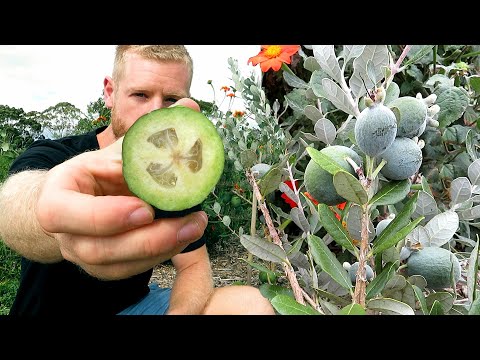
Anatomy of Flavor: What Does It Taste Like?
Describing the taste of a Feijoa is like trying to explain a color to someone who has never seen it. The flavor is a sophisticated, tart-sweet cocktail. Imagine muddling a strawberry, a pineapple, and a kiwi, then garnishing it with fresh mint and a squeeze of lemon. The texture varies within the fruit itself: the flesh near the skin is firm and slightly gritty (similar to a pear), while the center is a gelatinous, clear seed jelly.
“Eating a Feijoa is like eating a fruit salad contained within a single skin.” — A common sentiment among first-time tasters.
The aromatics are due to a high concentration of methyl benzoate, a compound that gives the fruit its distinct medicinal, wintergreen-like undertones. This chemical complexity is why the fruit is often polarizing; you either become a lifelong devotee or you find it too perfume-heavy.
Varietal Differences in the Market
While you won’t find variety names listed in a standard supermarket, farmers’ markets often distinguish them. The consumer experience changes drastically depending on the cultivar.
- Round Varieties: Generally have a higher ratio of the gelatinous center to the gritty outer flesh. These tend to be sweeter and are preferred for raw eating.
- Oval/Elongated Varieties: Often possess a thicker, more tart skin and firmer flesh. These are superior for cooking as they hold their shape better when heated.
- Smooth vs. Rough Skin: This is purely cosmetic and does not indicate ripeness or flavor quality, though rougher skins can sometimes indicate a more robust, “wild” flavor profile.
Nutritional Composition and Health Benefits
Beyond the taste, the Feijoa is a functional food powerhouse. It is calorically low but nutrient-dense. A standard serving (about two fruits) provides significant amounts of Vitamin C and dietary fiber. Our nutritional research at Exotic Fruits and Vegetables highlights that the Feijoa is distinct for its water-soluble iodine content.
The presence of iodine varies depending on the soil where the fruit was grown, but in coastal regions, it can be substantial. This makes the fruit particularly popular in regions with history of thyroid issues. Furthermore, the skin—which most people discard—is loaded with antioxidants, specifically catechins and proanthocyanidins, the same compounds found in green tea and red wine.
If you find the skin too tart to eat raw, do not throw it away! Zesting the skin into smoothies adds a massive antioxidant boost without the tough texture.
Culinary Applications: Beyond the Spoon
The standard way to eat a Feijoa is simple: slice it in half equatorially and scoop out the flesh with a teaspoon. However, limiting this fruit to raw consumption is a culinary crime. Its high acidity and pectin content make it an incredible ingredient for both sweet and savory applications.
| Category | Pairing Suggestions | Why It Works |
|---|---|---|
| Dairy | Greek yogurt, Brie, Cheesecake | The acid cuts through the richness of the fat, similar to passion fruit. |
| Meat | Pork roast, Duck, Venison | Feijoa chutney provides a tart counterpoint to gamey or fatty meats. |
| Spices | Ginger, Star Anise, Cinnamon | Winter spices complement the medicinal, minty notes of the fruit. |
| Beverages | Vodka, Gin, Apple Cider | The aromatic oils infuse rapidly into alcohol, creating floral cocktails. |
I once attended a dinner where the chef used dehydrated Feijoa slices as a crust for a seared scallop dish. The combination of the oceanic sweetness of the scallop with the floral grit of the fruit was a revelation. Because Feijoas oxidize (turn brown) rapidly after cutting, they must be treated immediately with lemon juice or cooked if they are to be presented aesthetically.
Ever wonder why Feijoa yogurt is so popular in New Zealand but rare in the US? It is purely a supply chain issue—the fresh fruit has a shelf life of only a few days, making industrial processing difficult outside growing regions.
Selection and Storage Guide
Finding a perfect Feijoa requires tactile engagement. You cannot judge ripeness by color; a rock-hard, unripe fruit looks identical to a perfect one. When shopping, gently squeeze the fruit. It should yield slightly to pressure, similar to a banana that is just starting to spot.
- The Smell Test: If you have to press your nose against the skin to smell it, it is likely under-ripe. A ripe Feijoa should be fragrant from a foot away.
- The Touch Test: If it is soft like a tomato, it is likely over-ripe. The flavor will have shifted from floral to fermented.
- The Cut Test: Once home, slice one open. The jelly sections should be clear. If they are white, it is unripe; if they are brown, it is spoiling.
Store firm fruits on the counter to soften for 1-2 days. Once they reach peak ripeness, move them to the refrigerator immediately. They are highly perishable. For long-term preservation, the team at Exotic Fruits and Vegetables recommends scooping the pulp and freezing it; the flavor remains remarkably intact even after months in the freezer.
Economic and Industrial Uses
While the fresh market is the primary driver, the Feijoa industry is expanding into processed goods. The fruit is naturally high in pectin, making it a dream for jam and jelly manufacturers. In the cosmetics industry, extracts from the fruit and seeds are being utilized in exfoliants and creams, marketed for their antibacterial and antioxidant properties.
Interestingly, the flower petals of the plant are also a commodity in niche markets. They are thick, fleshy, and taste like spicy marshmallows. High-end restaurants use them as edible garnishes, adding a burst of sweetness to salads that the fruit itself cannot provide.
One of the best ways to utilize a surplus of Feijoas is to make a “shrub” (a vinegar-based syrup). The vinegar preserves the floral notes that cooking often destroys.

The Future of the Feijoa
The Feijoa stands at a precipice in the American market. It is currently transitioning from a backyard curiosity to a boutique grocery item. As consumers continue to seek out novel flavors and functional foods with high antioxidant profiles, the “Guavasteen” is poised for a broader takeover.
It bridges the gap between the comfort of temperate fruits like pears and the excitement of tropicals like passion fruit. The Feijoa is not just a fruit; it is a seasonal event, a fleeting moment of flavor that marks the transition from autumn to winter. Whether you eat it fresh, drunk it in a smoothie, or spread it on toast, it offers a sensory experience that is undeniably unique.

How to know if a feijoa is ripe?

Nutrition feijoa

Facts about feijoa

Best potting mix for feijoa

Feijoa in a pot

Best feijoa for hedge

How to take feijoa cuttings?

Do feijoa trees need fertilizer?

Can you eat feijoa skin?

Do feijoa trees need lots of sun?

Taste of feijoa

Yellow leaves on feijoa tree

Best way to eat feijoa

Male and female feijoa trees

Uses for feijoa skins

Are feijoa flowers edible?

Freeze dried feijoa

Are feijoa leaves poisonous to humans?

Feijoa flowering season

Best feijoa varieties

Is feijoa edible?

Pineapple guava vs feijoa

When to harvest feijoa?

How to preserve feijoas

Can feijoas grow in Uk?

Feijoa hardiness zone

Why is my feijoa not fruiting?

What countries do feijoas grow in?

How long do feijoas take to fruit?
